
$33.90
Free delivery · 7–14 days
Three-Bubble Fidget Keychain for Portable Stress Relief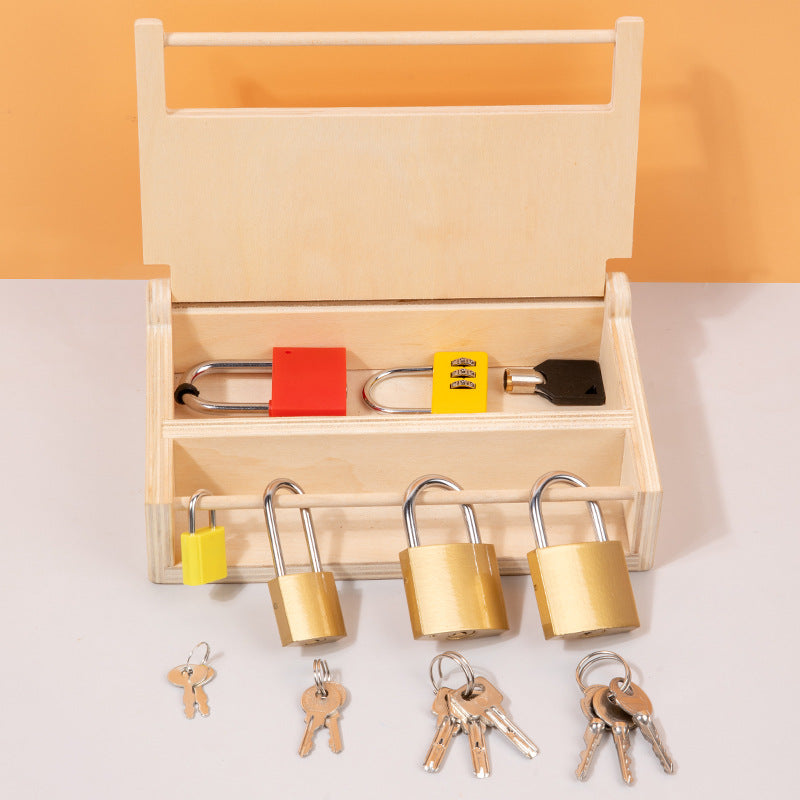
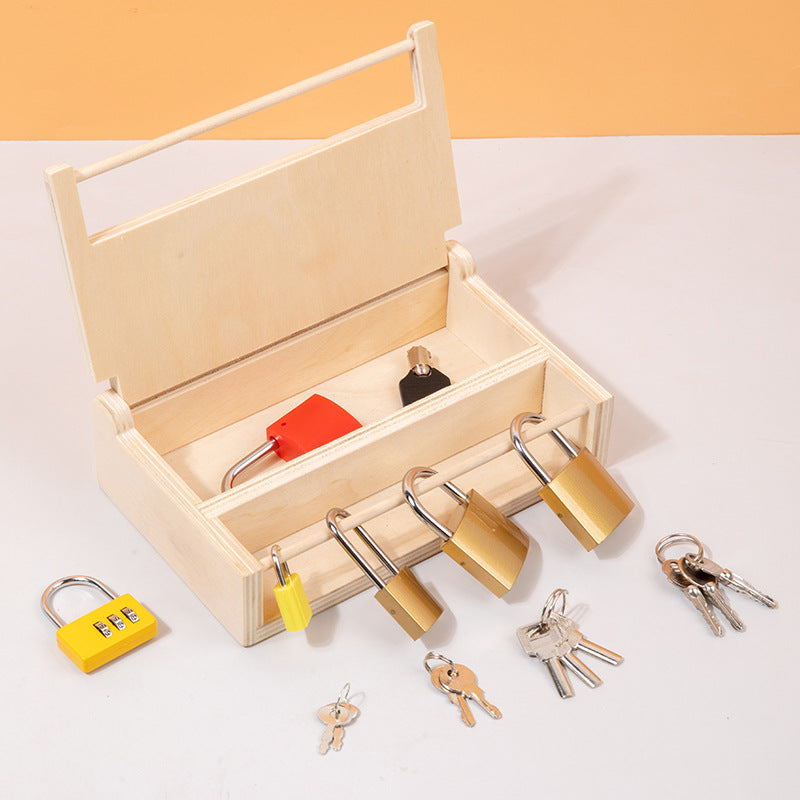
Turn quiet moments into purposeful discovery with a wooden Montessori locking toy box children can revisit again and again.
Read the full descriptionTurn quiet moments into purposeful discovery with a wooden Montessori locking toy box children can revisit again and again.
Hands-on Montessori lock-and-key play that builds early problem-solving and fine-motor skills
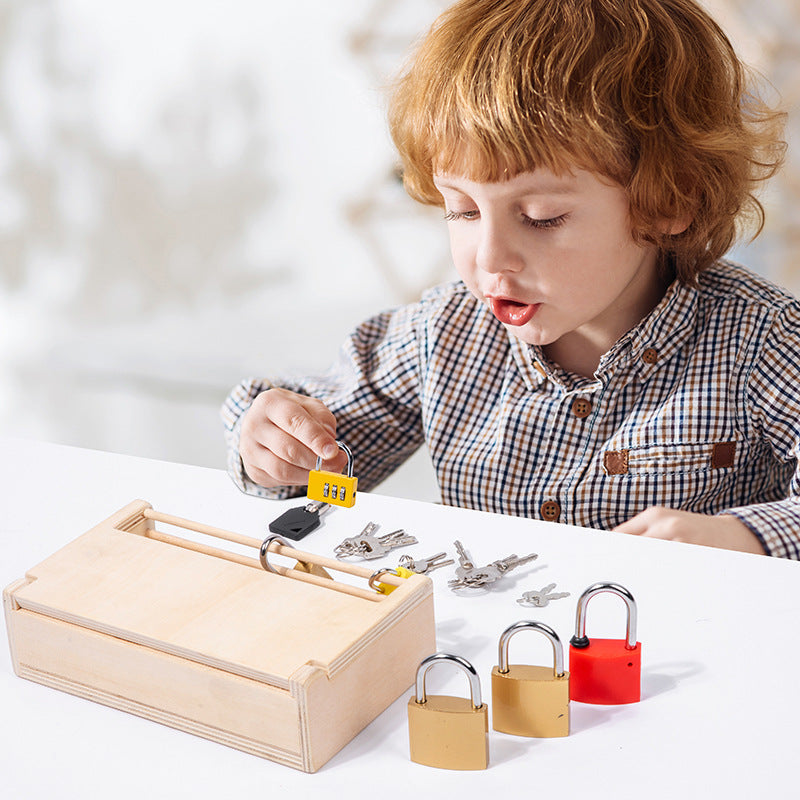
Replace short-lived screen distractions with focused, screen-free play. Children match keys, turn locks, and open each mechanism while building confidence through repetition.
The child can match, insert, turn, and open mechanisms repeatedly, creating a clear action-and-discovery loop for independent practice.
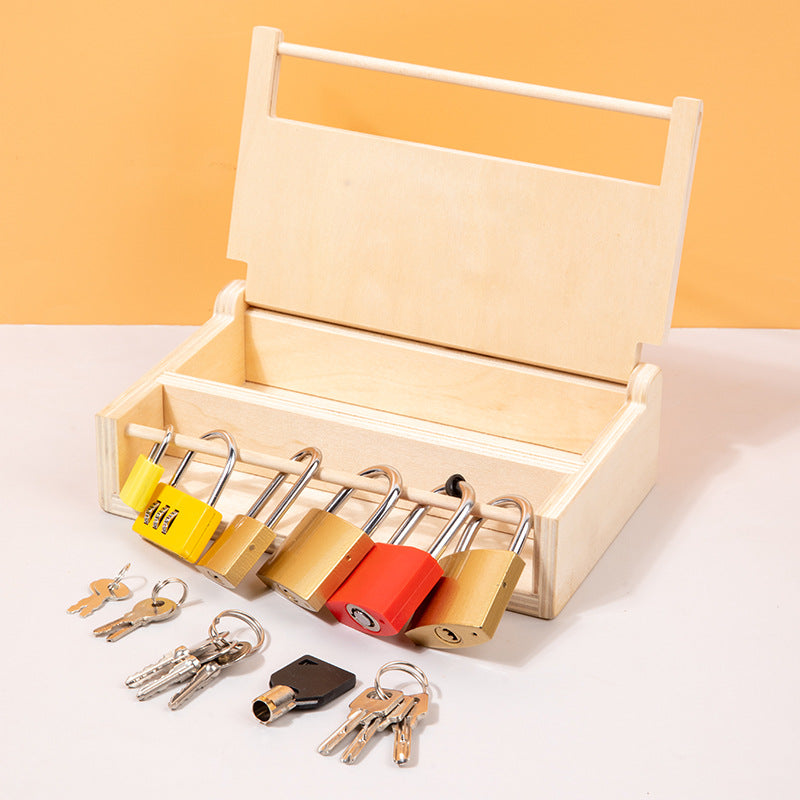
Multiple padlocks and varied lock mechanisms keep the activity from feeling like one puzzle repeated, while encouraging flexible problem-solving.
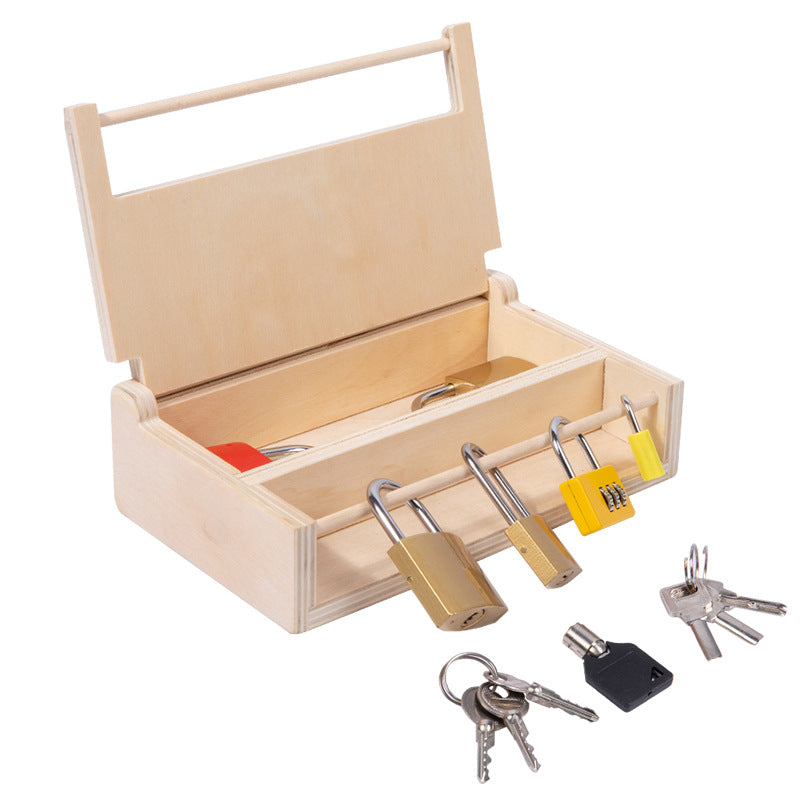
The hinged wooden case, carry handle, and storage compartment keep the activity organized between sessions and easier to bring along.
Smooth finished wood paired with metal lock-and-key hardware gives children a satisfying tactile activity without relying on screens or sound.
Open the case and place one or two locks in front of the child. Invite them to compare colors and choose a key.
Model how to insert the key and turn the mechanism slowly. Keep the demonstration short so the child can take over.
Let the child grasp, match, insert, and turn without rushing in. Offer a small hint when needed, then pause again.
Celebrate the opening moment, return the pieces to the case, and bring out another mechanism when the child is ready.
Hinged case with carry handle and storage compartment
Varied lock forms for repeatable challenges
Matching pieces for key-and-lock practice
Additional hardware for hands-on exploration
Little hands need regular practice with grasping, matching, and turning. Screens can hold attention, but they do not give children the same concrete reason to try, pause, and try again.
Each key creates a small question. Which lock does it fit? Can it slide in? What happens when it turns? The clear action-and-discovery loop gives children a reason to keep working.
The smooth wooden case gathers varied padlocks, matching keys, and black lock components in one organized activity. It gives screen-free play a clear beginning, middle, and satisfying finish.
After enough patient attempts, a child returns to the challenge with more purpose. Matching, inserting, turning, and opening become familiar actions they can explore with growing independence.
| Locking toy box | Screen time | Loose puzzle pieces | |
|---|---|---|---|
| Hands-on grasping and turning | Yes | No | Partial |
| Repeatable action-and-discovery play | Yes | Partial | Partial |
| Matching keys to locks | Yes | No | No |
| Built-in storage | Yes | No | No |
| Portable carry case | Yes | Partial | Partial |
It suits toddlers beginning to explore matching and turning, as well as preschoolers ready for more independent problem-solving. Adult supervision is essential because the set includes small keys and metal hardware.
Some mechanisms will feel easier than others. Start with one lock, model the key action, and give the child time to try. Younger toddlers may need more hands-on guidance before they open a mechanism independently.
The metal keys and lock hardware are intended for supervised, age-appropriate play. Keep the pieces away from children who mouth objects, inspect them before use, and remain nearby throughout the activity.
Yes. The set includes multiple colored padlocks and matching metal keys for practicing color matching, insertion, turning, and opening.
A busy board or puzzle can be useful, but this box focuses on a repeatable sequence of matching, grasping, inserting, turning, and opening. The hinged case also keeps the pieces together, giving the premium wooden set more lasting play value than loose pieces alone.
Yes. It fits practical-life shelves, small-group rotations, quiet-time tables, and supervised activity stations where children can choose a mechanism and return the pieces afterward.


 Montessori Locking Toy Box for Fine-Motor Learning