
$54.90
Free delivery · 7–14 days
Kitchen Knife Sharpener: Three Stages, One Direction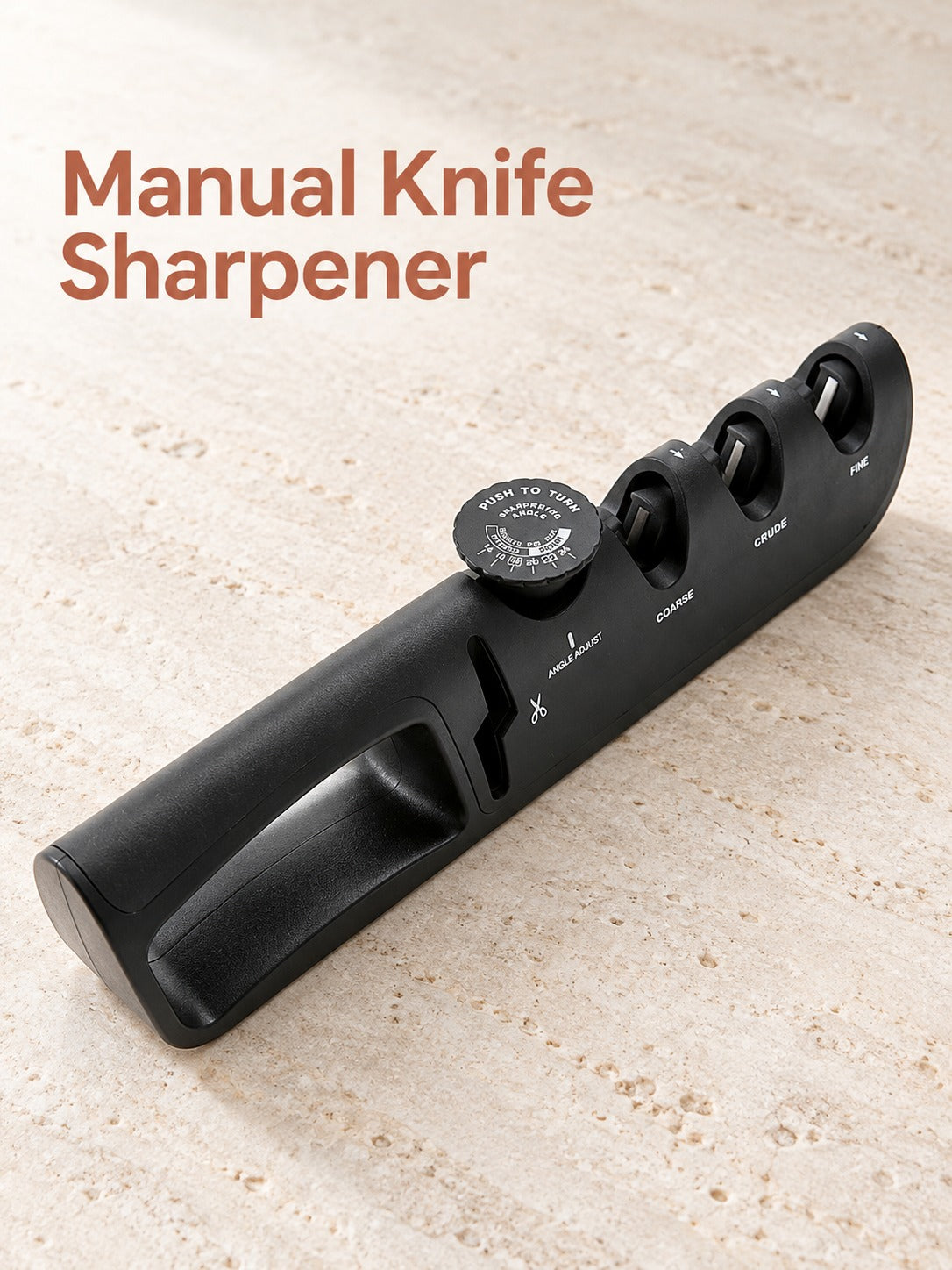
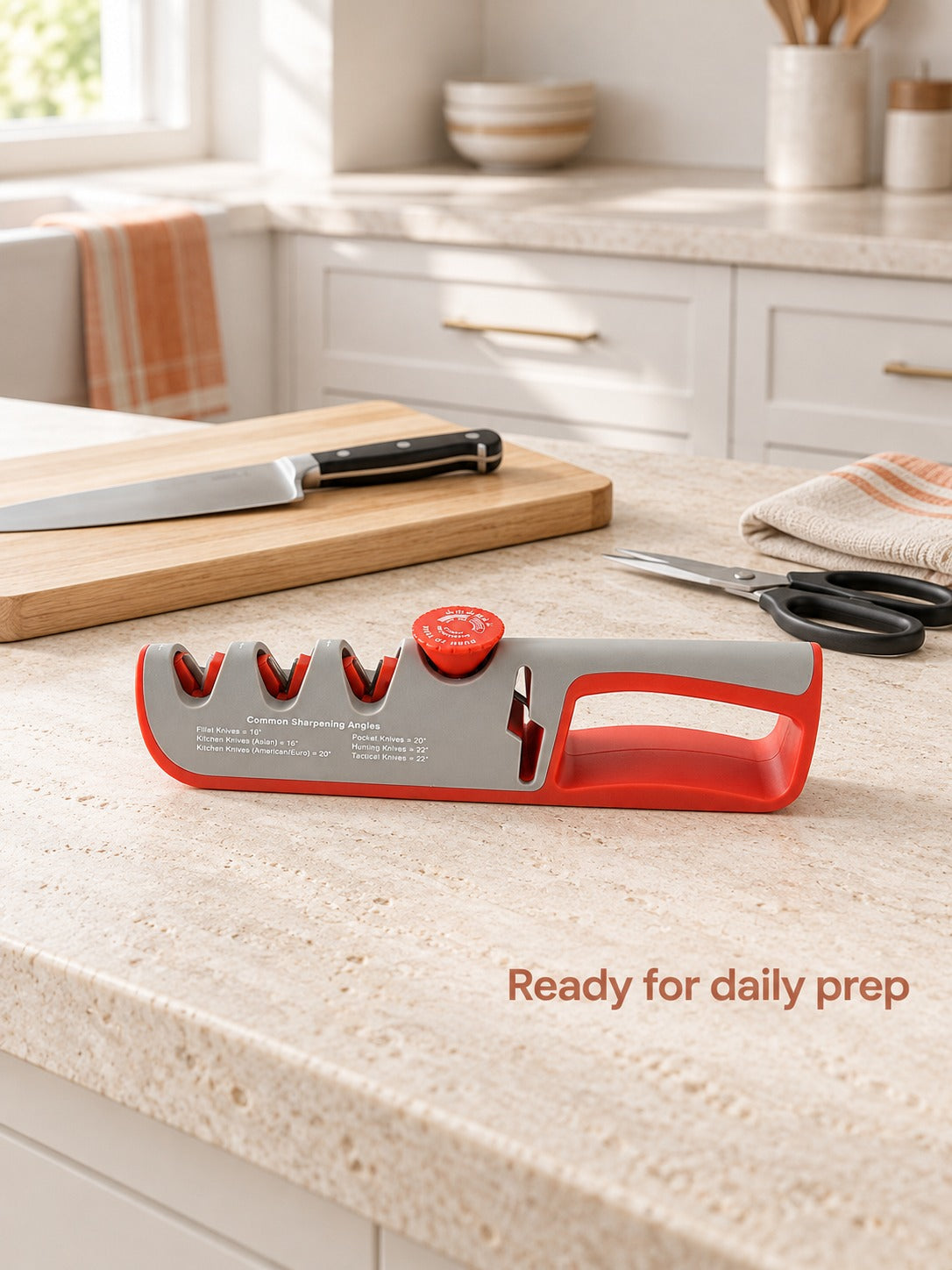


A dull knife slips off a tomato and the scissors tear instead of cutting. This four-stage manual sharpener sets the angle with a printed dial, so one ten-minute session at the counter brings the edge back. It covers 16, 20 and 22 degree angles plus a dedicated scissor slot.
Read the full descriptionA dull knife slips off a tomato and the scissors tear instead of cutting. This four-stage manual sharpener sets the angle with a printed dial, so one ten-minute session at the counter brings the edge back. It covers 16, 20 and 22 degree angles plus a dedicated scissor slot.
4-stage manual knife sharpener with adjustable angles for kitchen knives, hunting knives, and scissors
Tired of a dull blade that slips off tomatoes and scissors that tear instead of cut? Set the angle with the dial, run four stages, and cut cleanly again tonight.

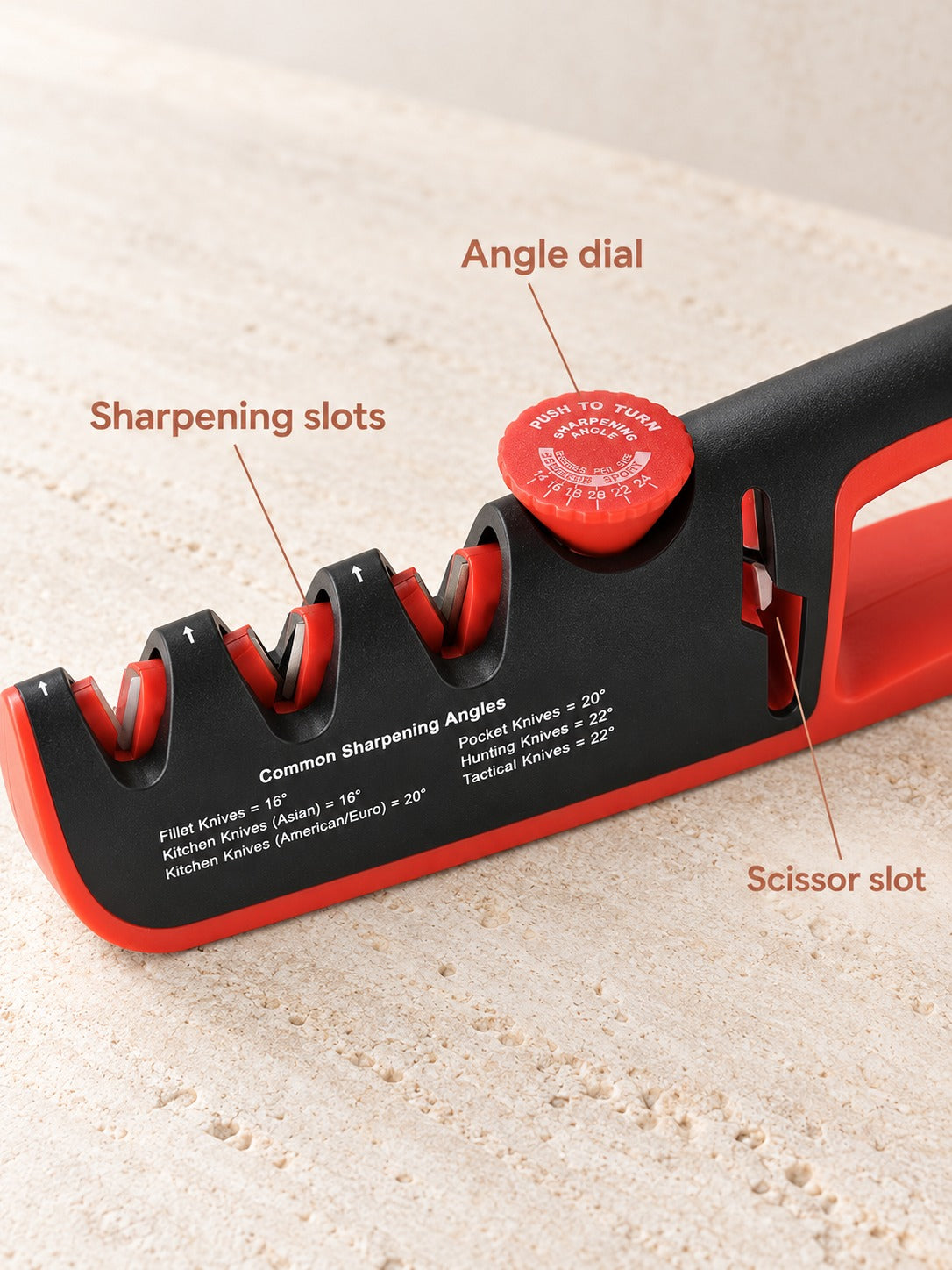
Push the dial to turn it and the printed 16, 20 and 22 degree markings tell you where it sits. Match the setting to your knife type, then keep the same setting every session. The next edge comes out the same as the last one.

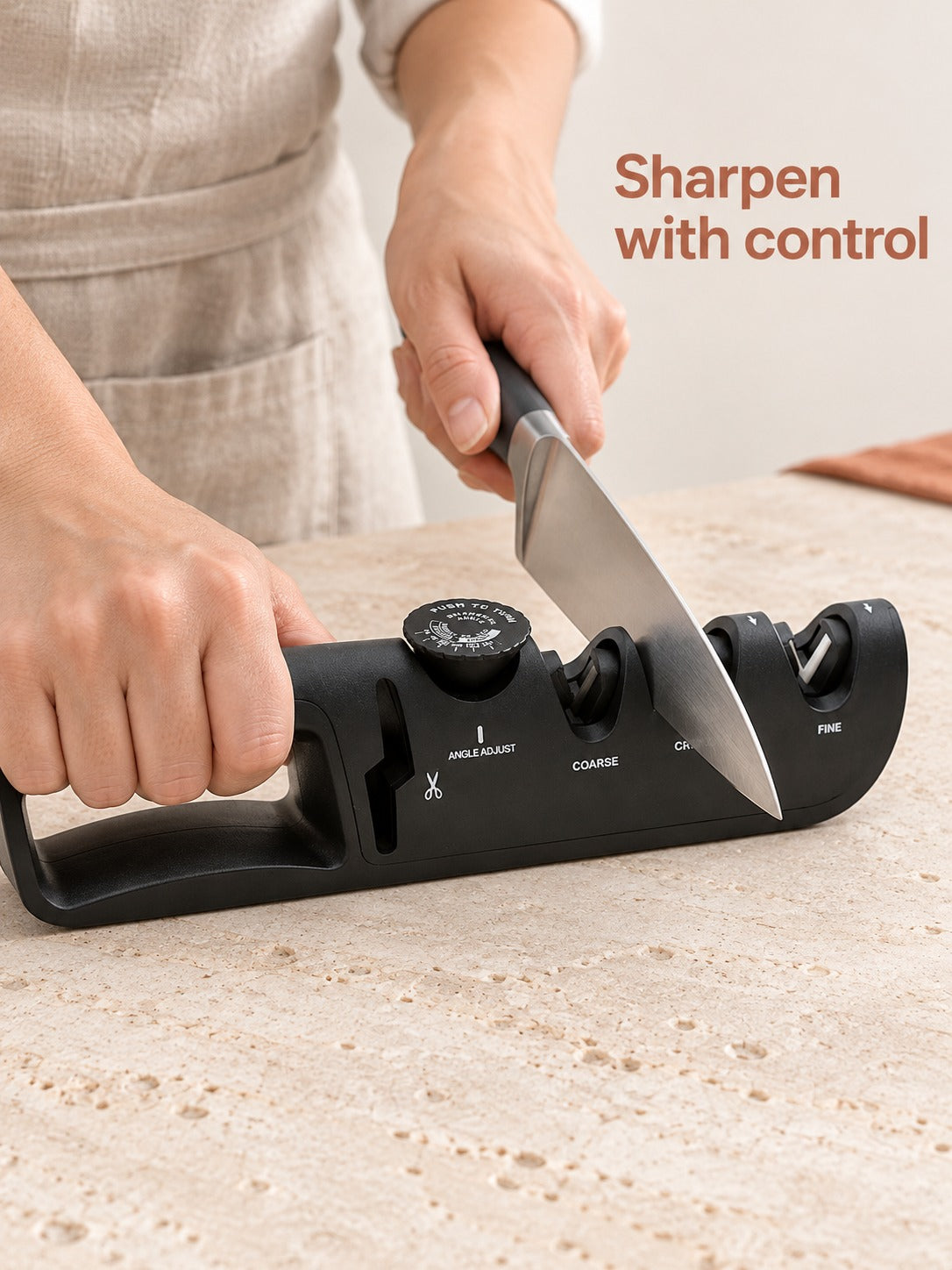
Coarse, crude and fine slots take a dull edge back to working sharpness, one stage at a time. The scissor slot handles kitchen shears on the same body. Start coarse on a badly dulled blade, then finish on fine for a cleaner cut.

At 29 x 7.6 cm and 280 g, it fits beside the sink and sits steady on the counter. The ergonomic grip keeps your hand off the stones. No cord, no batteries, just a few passes whenever a blade starts to drag.
Look up whether the blade is Asian, American or European style, or a hunting knife. Pick the matching angle from the printed scale.
Push the dial to turn it until the marking for your knife type lines up with the indicator. Keep this setting for the whole session.
Draw the blade through the coarse slot with light, steady strokes. Start here only if the edge is badly dulled.
Move to the crude slot, then the fine slot. Test the edge on a tomato or a sheet of paper. For scissors, use the scissor slot instead.
For badly dulled edges, first pass
Middle stage to rebuild the edge
Last stage for a cleaner cut
For kitchen shears and scissors
Printed 16°, 20° and 22° settings

A good chef knife starts dragging through a tomato and the skin gives way instead of splitting clean. Scissors do the same thing on a sheet of paper. You push harder, the blade slips, and the cut gets worse.

Freehand sharpening depends on a steady wrist and a sense of angle most home cooks never built. Tilt too far and you round the edge. Tilt too little and nothing changes. The blade loses metal and the knife still feels dull.

The dial sets 16, 20 or 22 degrees, and the printed scale tells you which one to use. Run the blade through coarse, crude and fine, then pass the scissor slot. The tool does the angle work so your hand only has to keep steady strokes.
| This sharpener | Pull-through sharpener | Whetstone | |
|---|---|---|---|
| Adjustable angle dial | — | Partial | |
| Multiple sharpening stages | — | ||
| Scissor slot included | — | — | |
| Works without soaking | — | ||
| Skill needed | Low | Low | High |
Asian kitchen knives sit at 16°, American and European kitchen knives at 20°, and hunting and tactical knives at 22°. The angles are printed beside the dial, so you can set it before you start.
Yes. Japanese knives usually take the 16° setting and German knives the 20° setting. If you know your blade's factory angle, set the closest marking. The dial gives you a repeatable angle, which is the part most freehand sharpening gets wrong.
Yes. The scissor slot is built into the same body. Open the blades, pull them through the slot a few times, then test on paper. Scissors that tear usually cut cleanly again after one pass.
The body is ABS plastic, and the sharpening work happens in the tungsten steel, ceramic and emery stages. The body holds the stages and the dial in place. For a budget manual tool, it is built for weekly touch-ups at the counter, not for rebuilding a heavily chipped blade.
A quick pass every week or two keeps everyday knives and scissors ready for prep. Each touch-up takes minutes at the counter, which costs far less than a trip to a sharpening shop each time a blade starts to drag.


 Manual Knife Sharpener, 4 Stages & Adjustable Angles