
$35.90
Free delivery · 7–14 days
Windproof Pillow Drying Rack with Mesh Bag for Toys


Heavy bedding stays on the line when the wind picks up. These large double-jaw clips grip quilts, towels and socks with ribbed jaws and an exposed metal spring, so less gets rewashed. A practical set for households that dry bedding at home.
Read the full descriptionHeavy bedding stays on the line when the wind picks up. These large double-jaw clips grip quilts, towels and socks with ribbed jaws and an exposed metal spring, so less gets rewashed. A practical set for households that dry bedding at home.
Strong, windproof grip that holds quilts, towels and socks on the drying rack
Wet bedding is heavy and small pegs give up on it, so every gust means a rewash. These large double-jaw clips grip quilts, towels and socks so they stay on the line from first hang to dry.
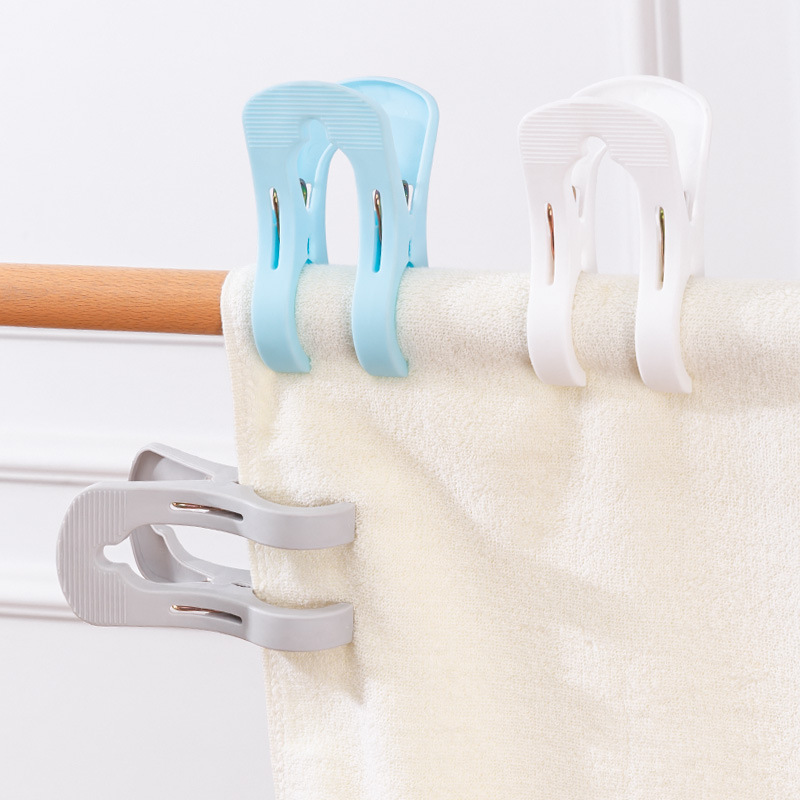
The large double-clip jaws take a thick, waterlogged quilt or blanket that a standard peg cannot clamp. Fold the fabric over the rail, clip the double layer, and the weight spreads across the jaw instead of pulling one small edge loose.
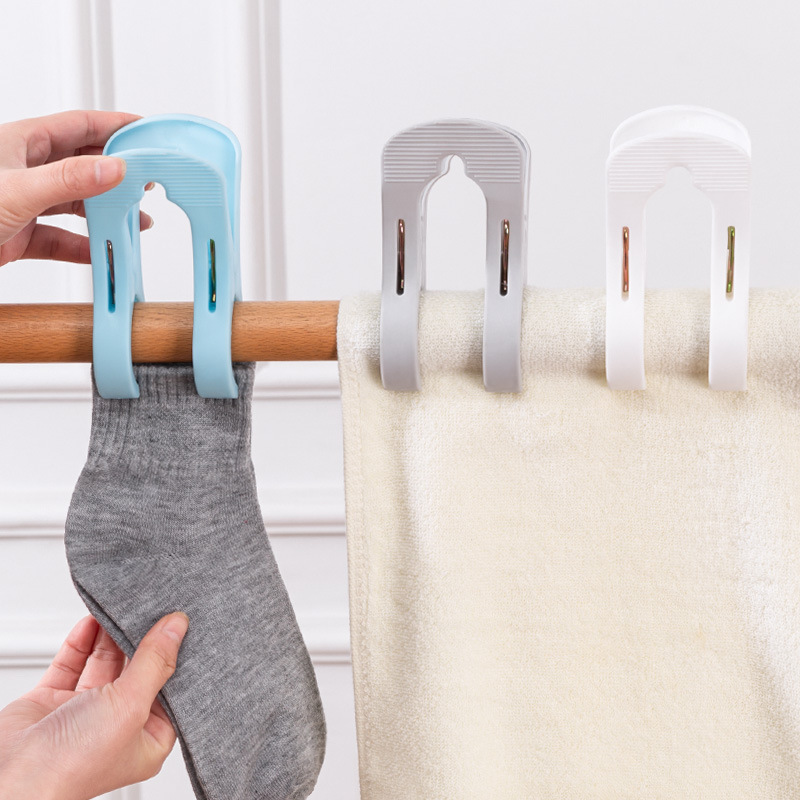
Ribbed ridges run along the inside of each jaw. Wet cotton and thick batting catch on them, and the exposed metal spring holds the clamp tight as the fabric stretches. Socks stay on the rod instead of sliding to the floor.
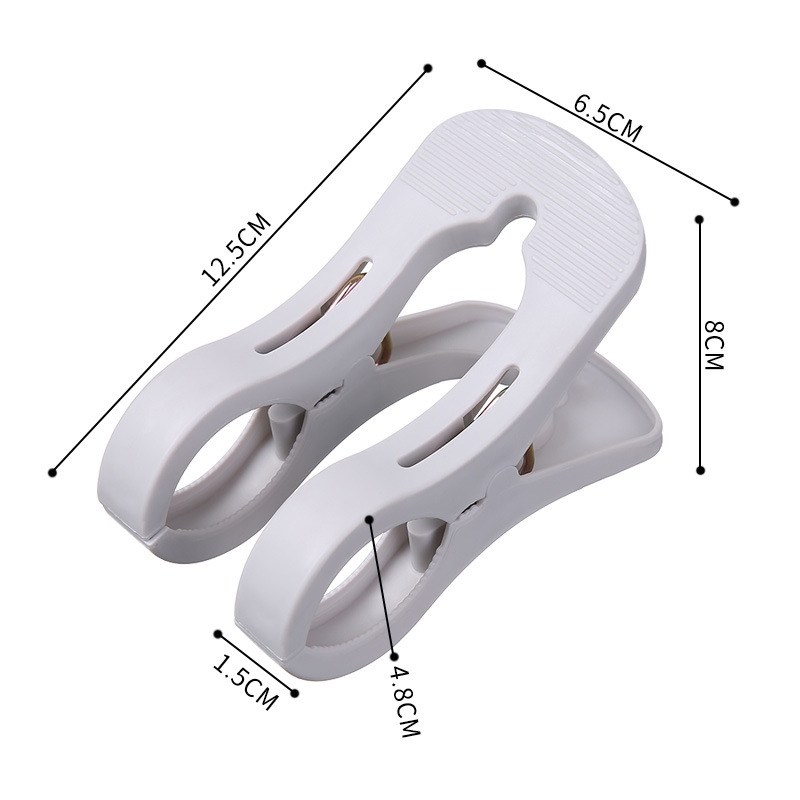
Each clip has a hook-style notch that sits over a drying rod or a line. The clip is 12.5 cm long, 6.5 cm wide and 8 cm high, so it hangs neatly and takes up little space on a crowded rack.
Fold a quilt or duvet over the rail or line so you clip two thick layers instead of one thin edge.
Squeeze the handles evenly with your thumb and fingers, open the jaws wide, and clip the double layer at the corners. Release slowly.
On a large quilt, add one more clip in the middle. Tug the fabric gently to confirm the grip before the wind picks up.
Ribbed grip ridges, exposed metal spring and a hook-style notch for the drying rod
Available as a 5-pack in pastel sky blue, clean white and light grey
A waterlogged quilt weighs more than most people expect. One sudden gust lifts the corner, the thin edge slides off the peg, and the whole thing lands in the mud. Then it goes back in the machine. Anyone who has done this knows the feeling of watching a week of washing hit the grass.
Wide double jaws take a thick fold of bedding in one squeeze. The ribbed grip ridges bite into damp fabric instead of letting it slide, and the exposed metal spring keeps the pressure steady as the load stretches. Socks and towels stay where you clipped them, the same as the quilt.
Hang the full load, clip it once, and walk away. The bedding, towels and socks stay on the rack or line through the wind until they are dry. Less re-hanging, fewer rewashes, and a line that looks the way you planned it.
Clip a wet towel or a small quilt corner first. Open the jaws, release them, and check the grip before you trust a full load on a windy day.
Hang a larger quilt or duvet cover on the rail or line. Check that the clips still grip after a few drying cycles, and rinse them if they collect dirt.
Most households keep the set on the same rod or line. Inspect the springs and plastic for wear, and store the clips dry between seasons.
Wash away dirt and salt from outdoor use before the clips go back in the basket.
Let the metal spring dry fully so it does not hold moisture between seasons.
Squeeze the handles evenly rather than pulling on the body to protect the plastic.
Sized to grip a folded quilt, not just a single sock
| Large double-jaw clips | Small standard pegs | |
|---|---|---|
| Holds a thick, wet quilt | — | |
| Ribbed grip surface | — | |
| Exposed metal spring for clamping force | — | |
| Hook-style notch for a drying rod | — |
Yes, that is the job they are built for. Fold the quilt over the rail so you clip two thick layers, then add a clip at the midpoint if the quilt is large. The wide double jaws and ribbed grip hold heavy waterlogged bedding where a small peg would let go.
The hook-style notch sits over a wooden drying rod or a clothesline, and that is how the clips are shown in use. Hang one clip to check the fit on your own rod before you load it up.
The body is matte plastic and the spring is exposed metal, so keep both clean and dry between seasons. Rinse off grit after heavy use and let the clips dry before storing them. That habit does most of the work in making the set last through many drying seasons.
Yes for bibs, small blankets and sleepwear hung by the hem. Keep the clips away from the baby's face and out of reach of loose cords, and check that the hem is clipped firmly before you walk away from the line.
Small pegs are fine for a sock or a tea towel. A quilt that drops in the mud gets rewashed, and that costs more water, detergent and time than a set of clips. These hold thick bedding through wind, which the small pegs do not.


 Large Quilt Clips for Drying: Windproof Strong Grip Clips