
$45.90
Free delivery · 7–14 days
Portable Cervical Traction Frame — Neck Pain Relief


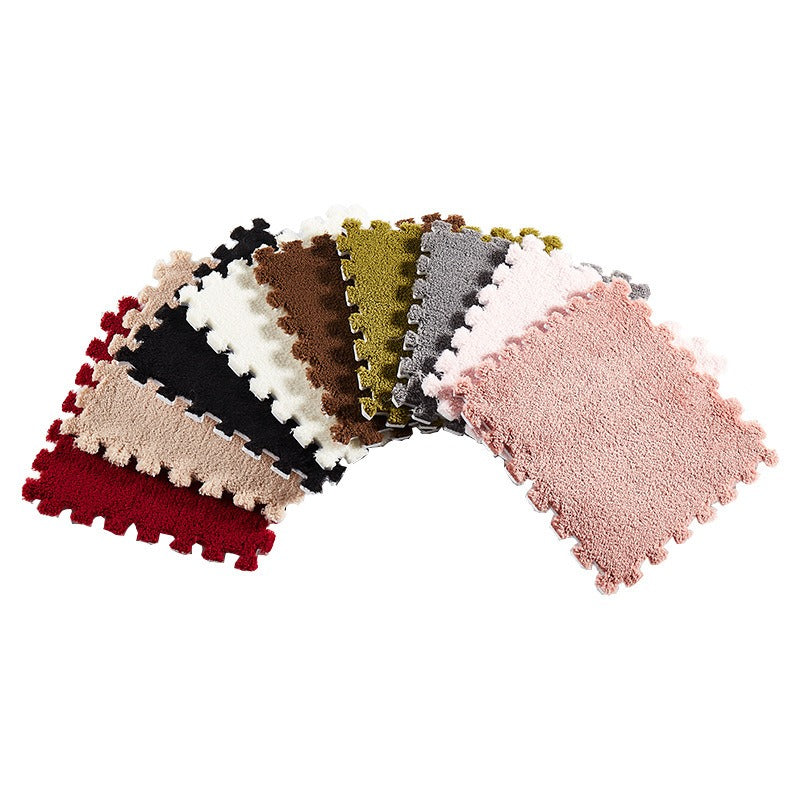


Turn a cold, hard floor into a softer place for bare feet, crawling, reading, and play. Plush velvet-like tiles connect into colorful room zones that fit around the way your home is used.
Read the full descriptionTurn a cold, hard floor into a softer place for bare feet, crawling, reading, and play. Plush velvet-like tiles connect into colorful room zones that fit around the way your home is used.
Create a soft, colorful full-floor covering by connecting plush puzzle-style mat tiles.
Connect plush velvet-like tiles into a colorful, continuous floor surface. Make bedrooms, nurseries, playrooms, and reading corners feel warmer and more inviting.

The dense, velvet-like pile gives the floor a softer, more decorative feel than a hard surface or basic utility mat. It brings a cushioned-looking texture to bedrooms, nurseries, and floor-level activities.
Puzzle-style interlocking edges let separate square tiles form a continuous-looking surface. The modular format fits a defined room area without forcing you into one fixed-size rug.

Bubblegum pink, vivid purple, coral pink, and black options give families room to match a nursery, brighten a playroom, or create a bolder bedroom detail.

Start with the area that needs comfort most, then build outward section by section. The square format works beneath a reading cushion, around a bed, or across a larger indoor play zone.
Measure the length and width of the bedroom section, nursery corner, play area, or reading nook you want to soften.
Place the tiles on the floor and arrange them around furniture, doorways, and the parts of the room used most.
Bring adjoining square edges together evenly. If a join looks uneven, separate the pieces and realign them before pressing them together.
Add connected pieces when you want broader coverage. A smaller arrangement can stay focused beneath a chair, cushion, or play area.
Separate modular pieces for building your chosen floor zone.
Dense, soft-looking fabric texture for a more comfortable surface.
Interlocking sides connect adjoining squares into a continuous-looking surface.
Cold, hard flooring shows up in ordinary moments: the first barefoot step from bed, knees on the floor during play, or a quiet reading session on an unwelcoming surface. A loose rug can slide or leave awkward uncovered areas, while a thin foam mat often feels purely utilitarian.
These square tiles change the feel of the room through a simple connection system. Align the puzzle-style edges and separate pieces become a continuous-looking surface with a dense, velvet-like pile beneath bare feet, knees, and floor play.
Build a focused reading nook, a nursery corner, or a broader playroom surface around the layout you already have. Use one color for a calm base or bring in pink, purple, coral, and black to make the floor part of the room’s personality.
Clear dust and debris before laying the tiles so the connected surface sits neatly.
Use a light touch when moving or rearranging pieces to preserve the plush-looking surface.
If pieces are moved, realign the puzzle-style edges evenly before reconnecting them.
Rearrange the modular sections when the room changes or a new comfort zone is needed.
| Focused zone | Room section | Broader area | |
|---|---|---|---|
| Measure first | Reading nook | Bedside or nursery area | Playroom or larger floor zone |
| Layout approach | Compact connected group | Build around furniture | Extend section by section |
| Planning note | Keep a clear edge | Check doorways and pathways | Map the full target area |
Measure the length and width of the target area before choosing how many square tiles to connect.
| Interlocking velvet tiles | Loose area rug | Plain foam mat | |
|---|---|---|---|
| Modular room coverage | Yes | No | Partial |
| Plush velvet-like surface | Yes | Partial | No |
| Puzzle-style connected edges | Yes | No | Yes |
| Playful color options | Yes | Partial | Partial |
| Works for a focused corner | Yes | Partial | Yes |
Yes. Align the adjoining edges evenly and press the square pieces together. The connected tiles create a continuous-looking floor surface with neat puzzle-style joins.
Yes. They suit bedrooms, nurseries, playrooms, reading corners, and supervised indoor crawling areas. Place them on a clear indoor floor and check the joins before use.
Measure the length and width of the area you want to cover, then plan the tiles around furniture and pathways. Start with the most-used section and expand the connected layout as needed.
Yes. The modular square format works for a compact arrangement beneath cushions or beside a chair, as well as a broader connected surface.
Loose rugs come in fixed shapes and can leave awkward edges, while plain foam mats often look utilitarian. These tiles combine a plush velvet-like surface, connected modular fit, and playful color.
Yes. Available color options shown in the product range include bubblegum pink, vivid purple, coral pink, and black.


 Interlocking Velvet Floor Mat Tiles for Softer Rooms