$199.90
Free delivery · 7–14 days
6-in-1 LED Microcurrent Skin Rejuvenation Beauty Device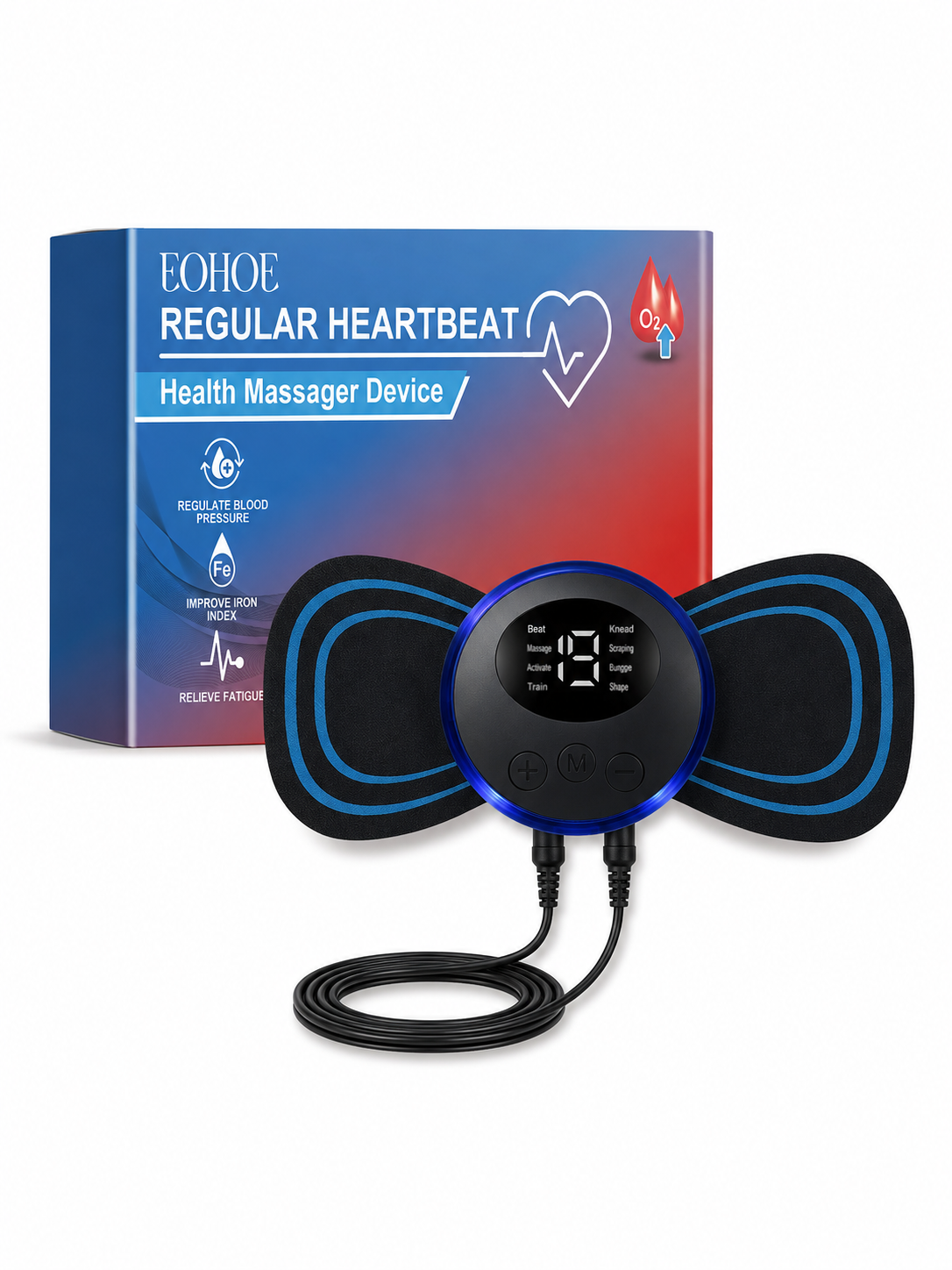
The EOHOE chest massager uses dual EMS electrode pads to target pectoral tension where foam rollers can't reach.
Read the full descriptionThe EOHOE chest massager uses dual EMS electrode pads to target pectoral tension where foam rollers can't reach.
Gently massages and lifts chest while regulating heartbeat and blood pressure for cardiovascular wellness
By 6pm the tightness across your chest has become background noise — shallow breath, rounded shoulders, zero energy left for yourself. The EOHOE chest massager places dual EMS electrode pads exactly where foam rollers can't reach: your upper pectoral zone. Fifteen minutes later, your shoulders drop and your breath deepens.
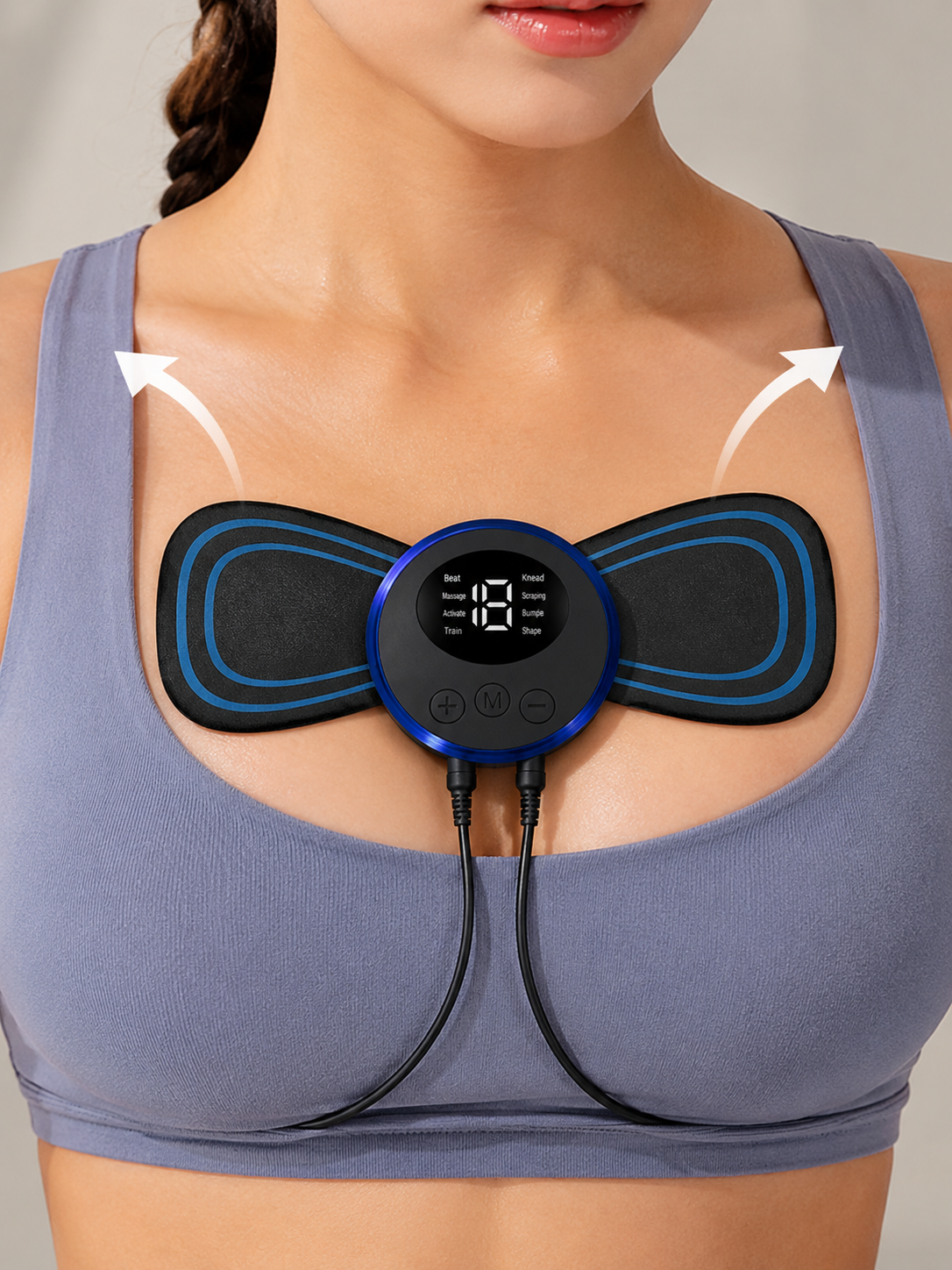
Most full-body EMS units ship with four pads meant for large back or leg muscles. The EOHOE ships with two pads sized and spaced for the upper chest — the exact zone desk workers, new mothers, and fitness athletes compress most. Symmetrical placement delivers equal stimulation to both sides of the pectoralis major simultaneously.
A crisp digital readout lets you track exact intensity level — no guessing, no blind button-mashing. Three mode buttons let you choose between gentle circulation pulse, deep muscle release, and recovery rhythm. The electric-blue ring around the bezel makes it easy to read in a dim bedroom without lighting up the whole room.
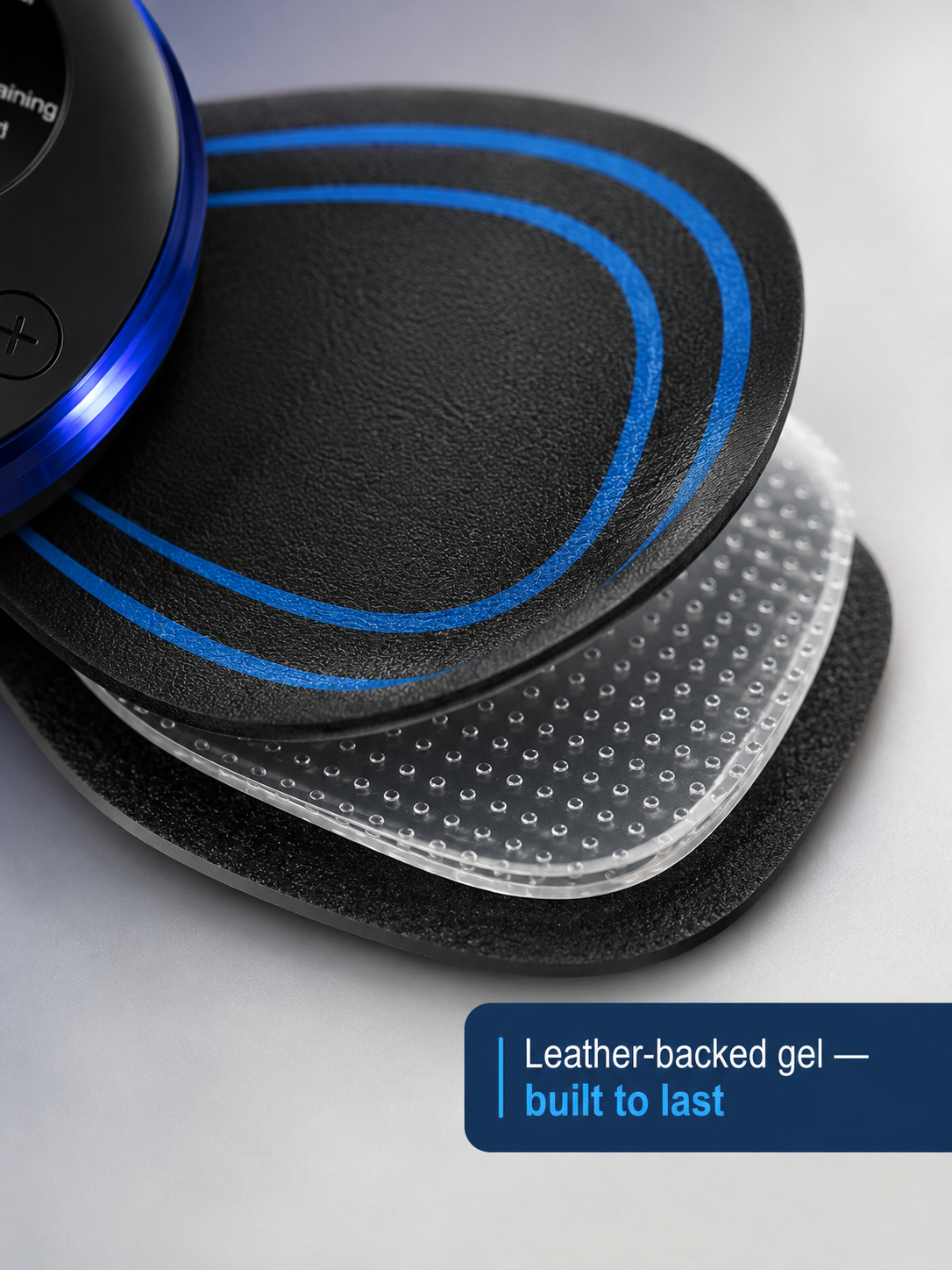
The control unit is high-grade ABS — lighter than it looks, harder to crack than cheap medical-device plastics. The electrode pads use a leather-backed gel construction that maintains conductive contact without slipping during a session. Compare this to the thin adhesive pads that peel after six uses. These are built for a daily ritual.
Wipe your upper chest with a damp cloth — not oily, not bone dry. The gel pads conduct best on clean, slightly hydrated skin. This also extends pad life.
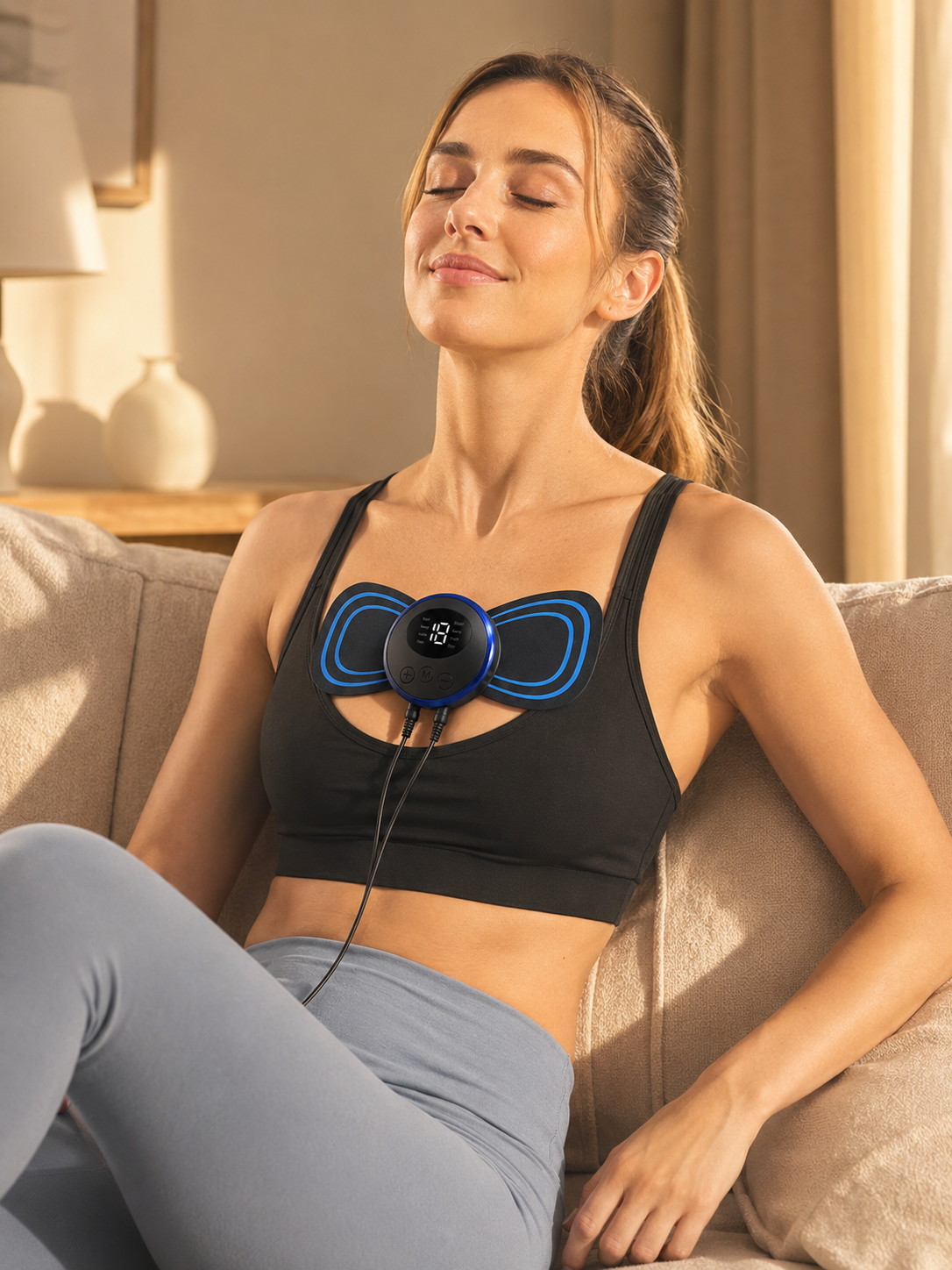
Place one pad on the left upper pec and one on the right — mirroring each other. Keep both pads clear of the sternum (the bony center line). The cable should run down toward the control hub resting below your chest.
Press the center button. The LED display blinks to life. Select mode 1 and set intensity to level 3. Let the first minute pass before adjusting — your muscles will relax into the rhythm faster than you expect.
Most users find 15 minutes ideal. If you feel any discomfort, drop one intensity level rather than removing the pads entirely — most discomfort is intensity, not placement. When the session ends, press and hold the center button to power off.
Peel the pads away slowly and replace the protective film immediately. Store the unit at room temperature. Clean the pads with a lightly damp cloth if any skin residue remains — never with alcohol or harsh cleaners.
Matte black bowtie design with LED display and three-button interface
Leather-backed, pre-attached to the control hub via cable — ready to use out of the box
Reattach after each session to maintain gel tackiness and extend pad life

Pectoral fascia shortens quietly. Over weeks it pulls your shoulders forward and compresses your breathing. Foam rollers reach your back; tennis balls against the wall are awkward and inconsistent. A $90 massage appointment you can't justify weekly treats the symptom for two days and then the cycle resets.
The EOHOE massager is built around a chest-specific EMS placement that most full-body units ignore entirely. Two gel electrode pads sit symmetrically on your upper pectorals while the bowtie control hub reads your intensity on a crisp digital display. The pulses mimic the kneading rhythm of a trained therapist's hands — without the appointment.
The pulses feel strange for about 90 seconds — rhythmic and unfamiliar. Then your shoulders visibly drop as the pectoral muscles stop holding. Most first-time users notice they're breathing more slowly by the end of the session.
After three or four sessions the baseline shifts slightly. You wake up and the chest band that used to greet you by morning simply isn't there. The posture change is subtle but you feel it in your breath.
Friends may comment that you look taller or more open. You're breathing deeper without prompting yourself. The 15-minute ritual has stuck — it costs you less willpower than it did in week one.
The device lives on the nightstand. You reach for it the way you reach for a toothbrush — short, consistent, unremarkable in the best possible sense. The tight band across your chest has become a past-tense memory.
| EOHOE Chest Massager | Foam Roller | Generic TENS Unit | |
|---|---|---|---|
| Reaches pectoral fascia (front of chest) | — | Partial | |
| Hands-free during session | — | ||
| Intensity control with digital display | — | — | |
| Leather-backed gel pads for durability | — | — | |
| Chest-specific pad sizing and placement | — | — | |
| Usable lying down in bed | — |
Yes — when placed correctly. The pads go on the upper pectoral muscles, symmetrically left and right, never directly over the sternum or crossing the heart. This is the standard placement guideline for all chest-area EMS devices. If you have a pacemaker, implanted cardiac device, or have been diagnosed with a heart arrhythmia, consult your doctor before use.
The honest answer: habit formation is on you. What the device does help with is lowering the friction — 15 minutes, no appointment, no driving, no changing clothes. Users who place it on the nightstand rather than in a drawer report the highest consistency. The transformation milestones above give you a concrete reason to stick with it past the first week.
Three things: the pads are sized and shaped for the pectoral zone specifically (generic TENS pads are square and designed for large back muscles), the electrode backing is leather-gel construction that outlasts thin adhesive pads, and the digital display gives you exact intensity readout rather than a vague dial. Generic units also skip the chest-lift positioning that this device is calibrated for.
After each session wipe the pads lightly with a slightly damp cloth — no alcohol, no soap. Store with the protective film on the gel side. When the pads lose tackiness and no longer adhere to skin reliably, it's time to replace them. Keeping the skin clean and slightly moist (not oily) before each session extends pad life significantly.
Yes. The pectoral compression that builds up from desk work, heavy lifting, and shallow breathing affects both. Men over 35 dealing with gym-related chest tightness or posture-related discomfort report the same results as women. The device is unisex in placement, intensity range, and benefit.


 EOHOE Chest Massager — EMS Pectoral Relief Device