
$44.90
Free delivery · 7–14 days
Acupressure Foot Pads — Naturally Lower Blood Sugar & Heel Relief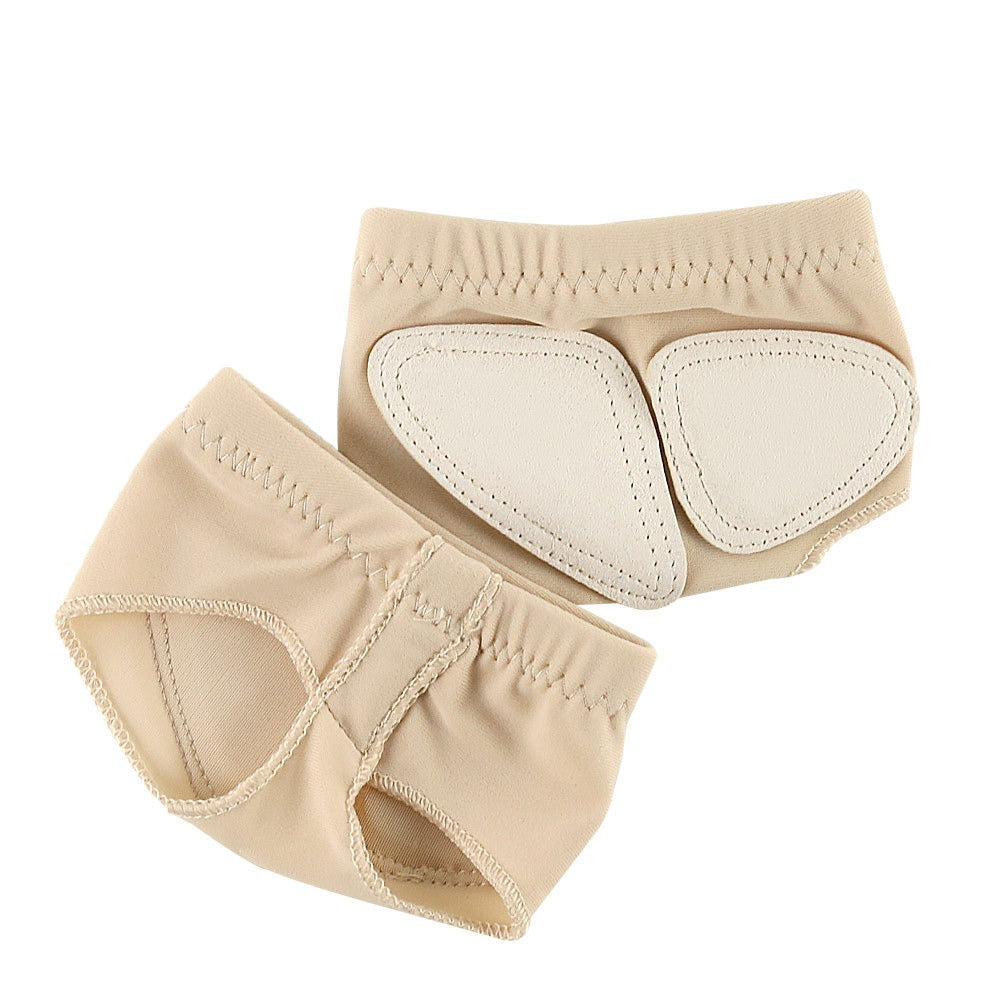

Stay focused on the choreography, not a sore forefoot. This low-profile ballet foot cover protects the ball of the foot while open toes and heel preserve barefoot-style movement.
Read the full descriptionStay focused on the choreography, not a sore forefoot. This low-profile ballet foot cover protects the ball of the foot while open toes and heel preserve barefoot-style movement.
Protects the ball of the foot while preserving barefoot-style flexibility and floor contact.
Stop letting forefoot friction and pressure interrupt practice. This low-profile cover cushions the ball of your foot while your toes, heel, and floor connection stay free.
Contoured padded panels sit over the ball of the foot, the area most exposed to repeated dance floor friction and pressure.
Exposed toes and heel preserve barefoot-style flexibility, floor contact, and the ability to articulate through transitions.
The stretch opening conforms around the forefoot instead of adding the volume and structure of a full dance shoe.
Select S for sizes 35-36, M for 37-38, L for 39-40, or XL for 41-42.
Stretch the opening gently over the forefoot and center the padded panels over the ball of the foot.
Make sure the toes and heel are free, with no edge folding into the areas that need natural movement.
Walk, flex, pivot, or rehearse a few transitions. Adjust the cover if the padding is not centered or the fit feels distracting.

Repeated turns, pivots, and floor contact can leave the ball of the foot sore or rubbed. That distraction changes how confidently you move, especially when practice still has hours to go.

This cover sits over the forefoot instead of enclosing the whole foot. Padded panels target the pressure point while the open toes and heel keep the design close to barefoot movement.
The stretch construction conforms around the forefoot, helping coverage feel discreet during class, rehearsal, or training. Your toes, heel, and floor awareness remain part of the movement.
Inspect the opening, seams, and padded panels after class or rehearsal.
Follow the garment care instructions supplied with the product and let it dry fully before storing.
Keep the compact cover away from sharp objects that could catch the stretch fabric.
Stop using it if the fabric, stitching, or padding becomes damaged.
| Foot cover | Socks or tape | Full dance shoe | |
|---|---|---|---|
| Ball-of-foot coverage | Yes | Partial | Yes |
| Toes remain exposed | Yes | Partial | No |
| Heel remains open | Yes | Partial | No |
| Barefoot-style floor contact | Yes | Partial | Partial |
| Adds full-shoe structure | No | No | Yes |
Its stretch opening is designed to sit closely around the forefoot, but fit and placement matter. Center the padded panels before movement and test a few turns or pivots before increasing pace.
No. The design leaves both the toes and heel exposed so you can keep a barefoot-style connection with the floor.
It is suited to adult ballet, Latin dance, belly dance, gymnastics training, rehearsals, performances, and studio workouts where an open toe and heel are appropriate. Always follow your instructor's footwear and floor-safety rules.
It should sit close without feeling painfully tight. The padded panels should be centered over the ball of the foot, while the toes and heel remain free from pressure.
It is designed as a focused alternative to a full dance shoe, not a universal underlayer. Check the shoe's interior space and test carefully, since added layers can change fit and movement.
The cover gives targeted forefoot coverage while keeping the toes and heel open. Socks may move, tape can feel restrictive, and loose gel pads may shift. This is a reusable, compact middle ground, so the value comes from replacing repeated improvisation with one focused practice essential.


 Ballet Foot Covers for Flexible Ball-of-Foot Protection