
$41.90
Free delivery · 7–14 days
Invisible Acne Patches — Flatten Pimples & Fade Marks | 144 Ct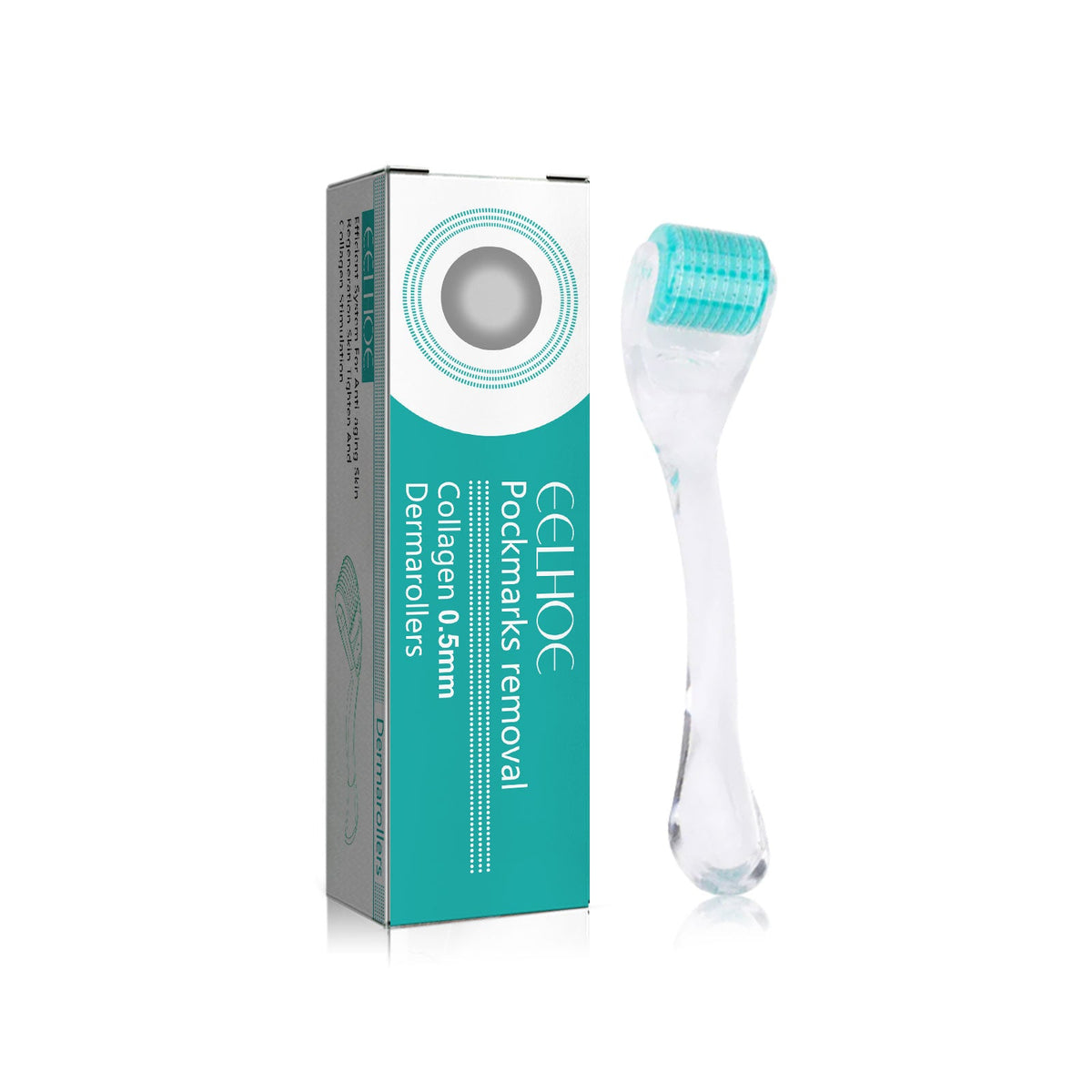
The same pitted scars you've covered with concealer for years can actually change texture with a weekly ten-minute micro-needling session.
Read the full descriptionThe same pitted scars you've covered with concealer for years can actually change texture with a weekly ten-minute micro-needling session.
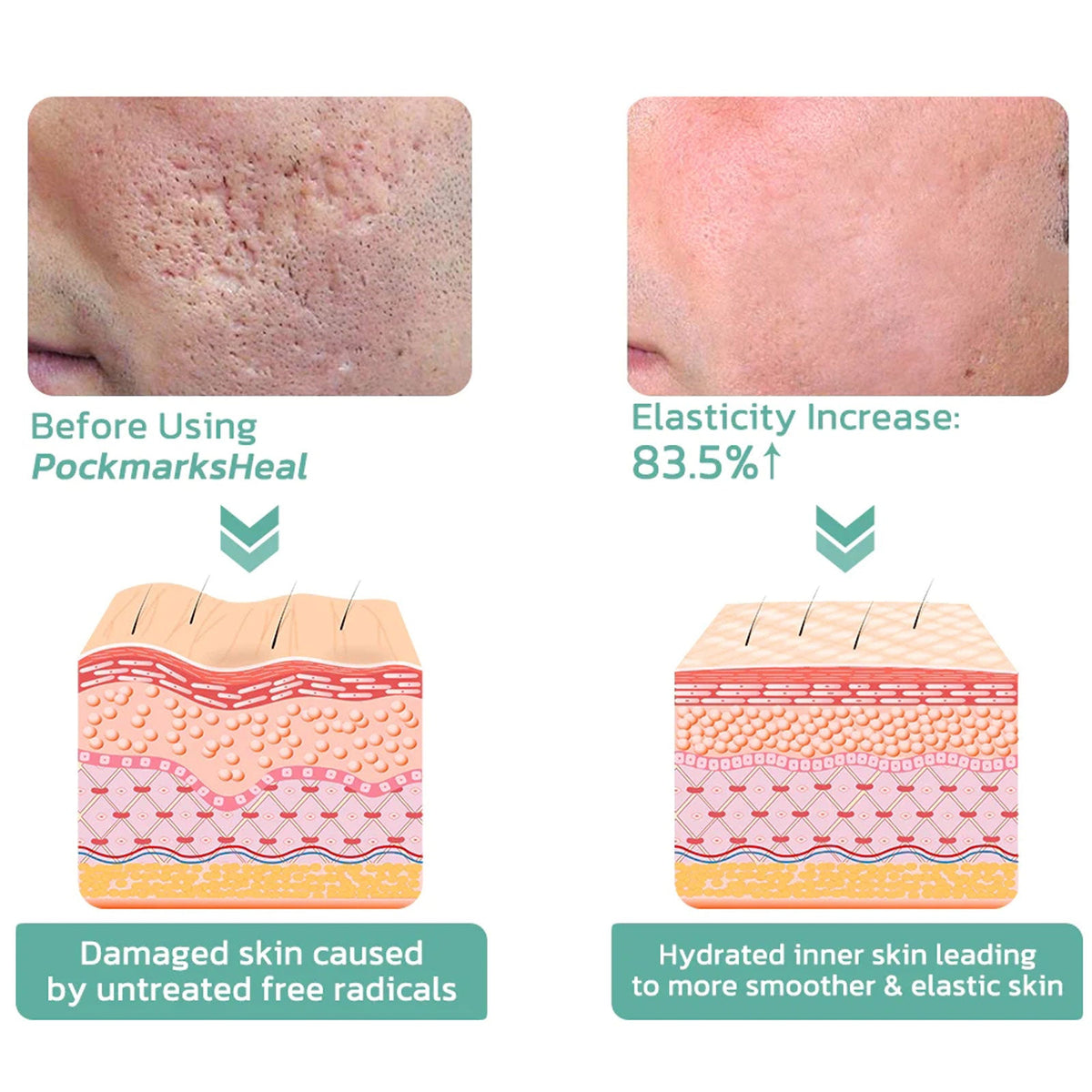
Visible pockmark and scar removal through professional 0.5mm collagen dermaroller technology
You've covered pockmarks with concealer for years. This 0.5mm dermaroller works underneath the surface so skin texture actually changes.

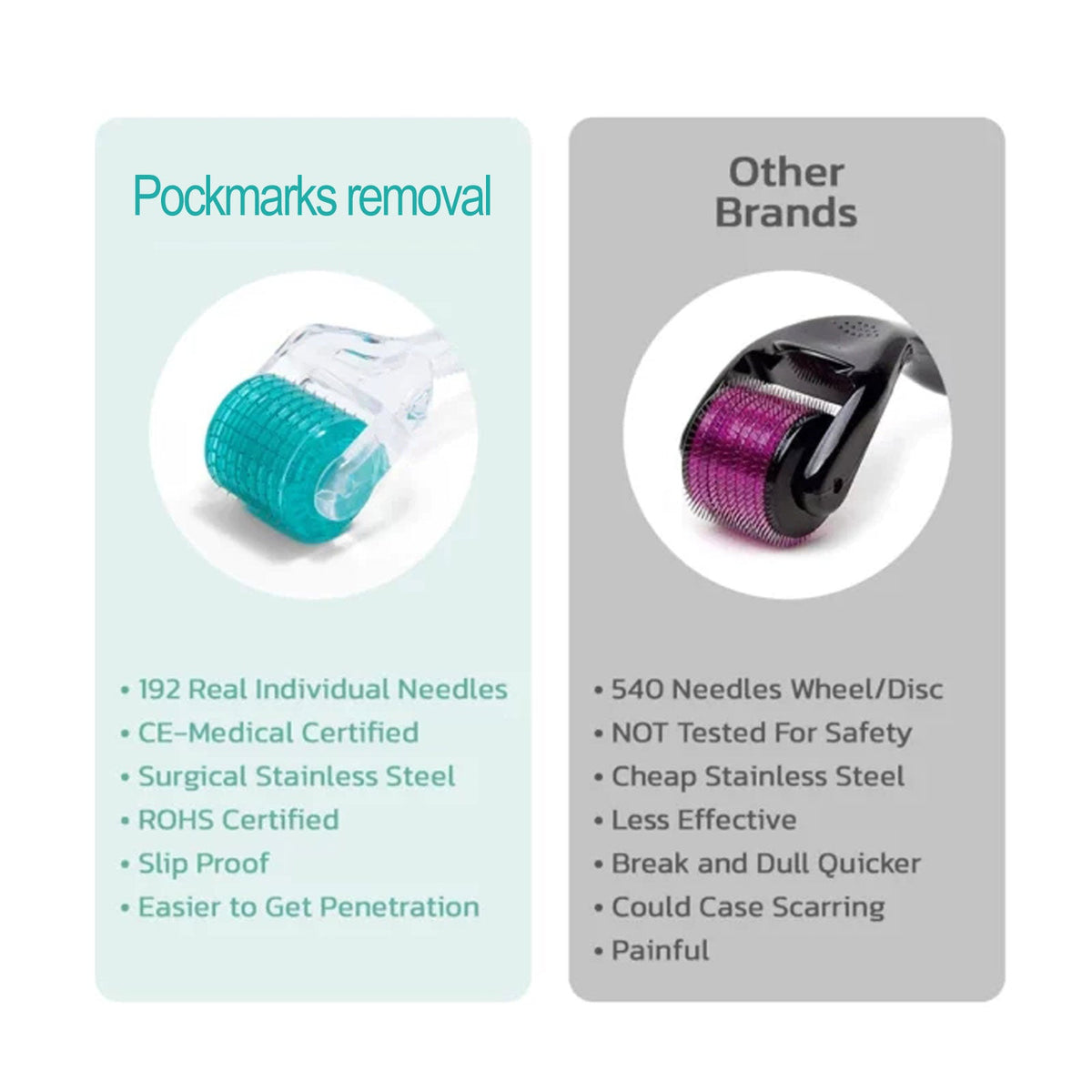
0.5mm is deep enough to create the micro-channels associated with collagen response, unlike a surface-level jade face roller that only helps product absorption. This is the depth dermatologists talk about for scar remodelling, named plainly on the packaging so you know exactly what you are using.

The white grip is shaped so you can apply even, controlled pressure across cheeks, forehead and jawline without slipping. That matters at 0.5mm depth, where consistent pressure means better coverage and less chance of over-working any single area.

A two-roller set means a clean backup is always ready when weekly routine day comes around. Rotate tools between sessions and the hygiene step becomes simpler, not an interruption.

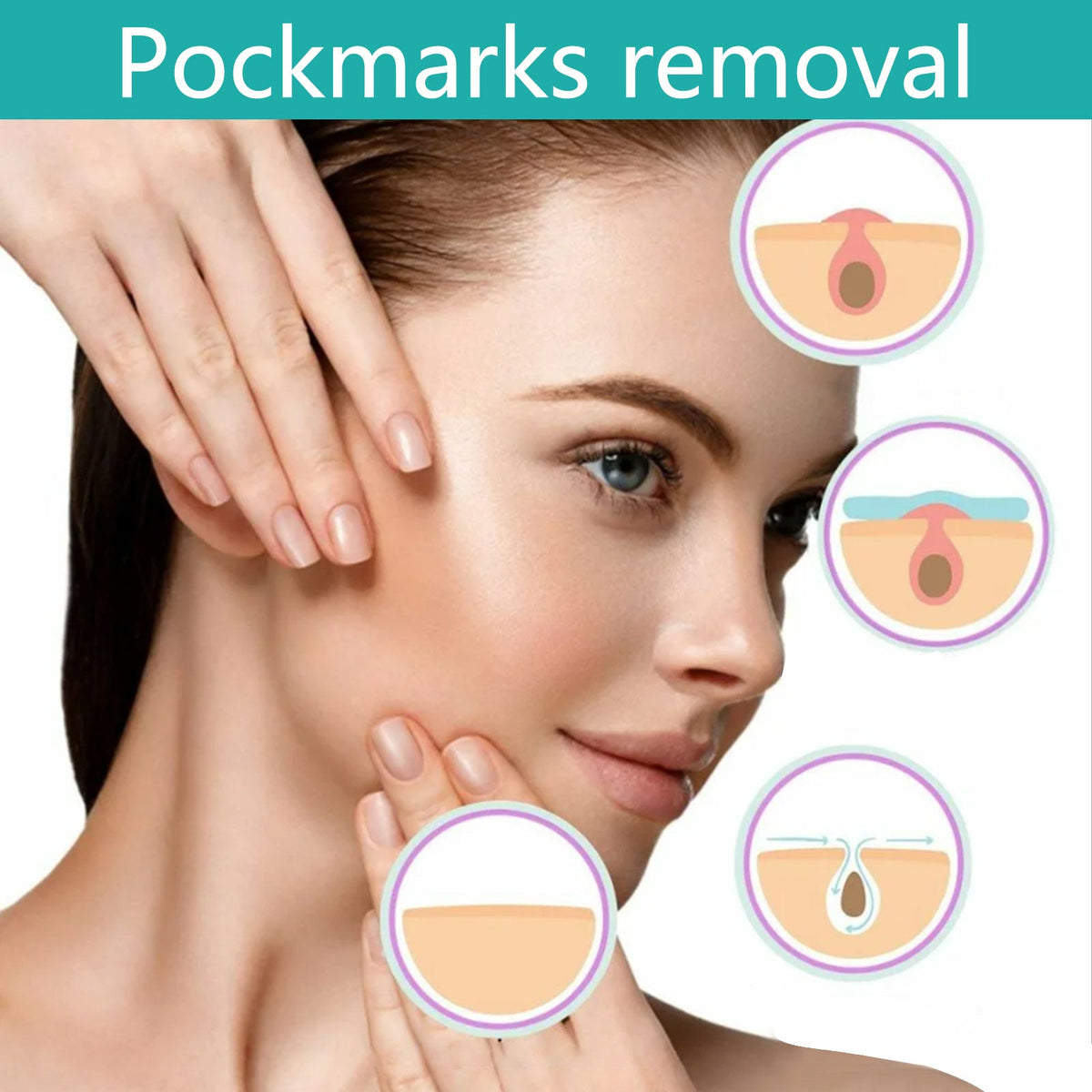
The packaging carries educational diagrams showing the micro-channel mechanism behind visible texture change. It is a tool that explains itself, grounding the claim in how the needle head physically works at the dermis level.
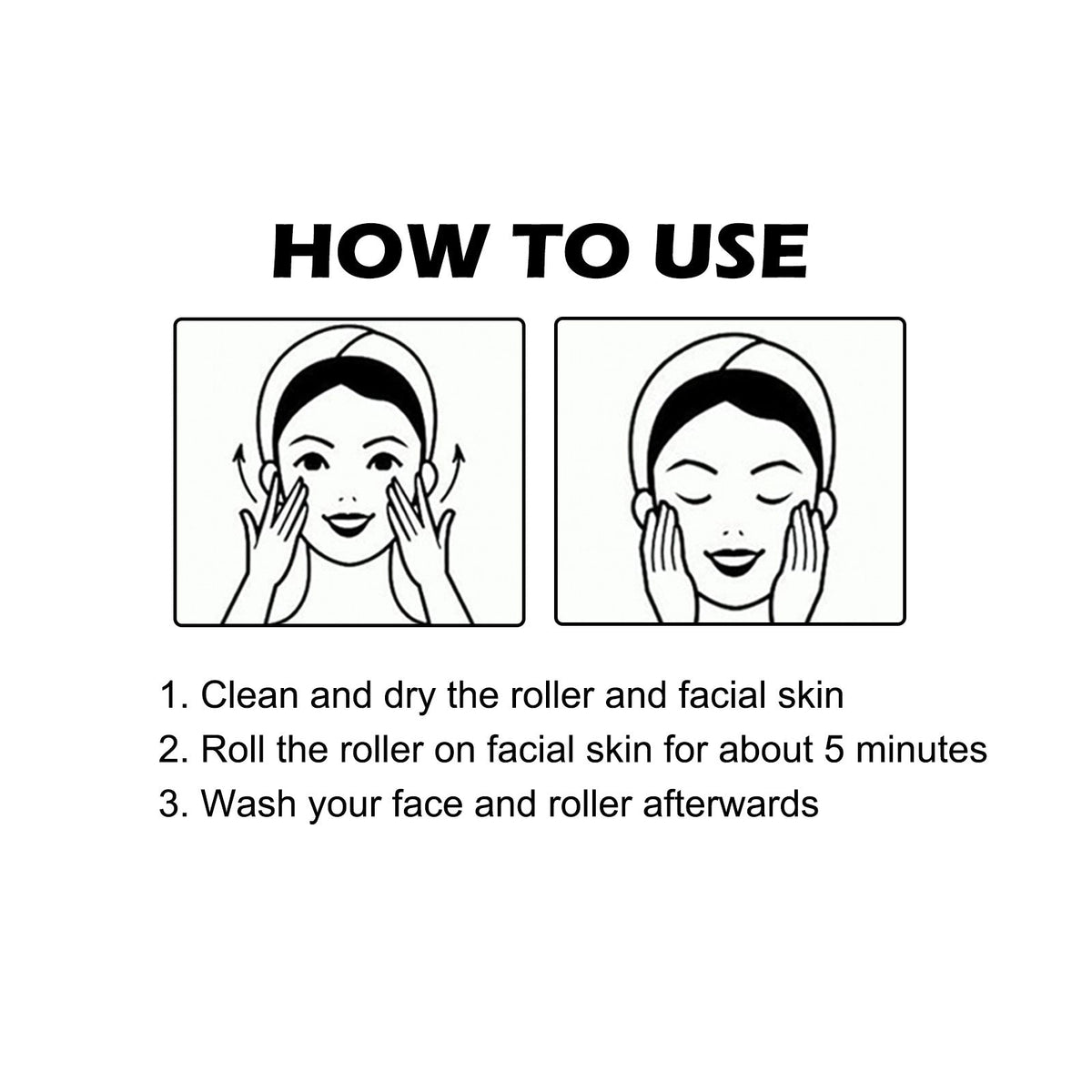
Wash your face with a gentle cleanser and pat completely dry. Any oil, makeup or residue left on the skin is a barrier between the needles and the surface.
Spray or soak the needle head in 70% isopropyl alcohol for a few minutes. Let it air dry fully before touching your skin.
On the cheek, forehead or jaw, roll vertically, horizontally, then diagonally. Use 2 to 3 passes per direction with light, even pressure. Do not press hard.
While the micro-channels are most receptive, apply a gentle face serum. Hyaluronic acid or a simple soothing formula is ideal. Avoid harsh actives until the next day.
Sanitize the roller head again after use, let it air dry completely, and store it in a clean, dry place. Do not put it away damp.
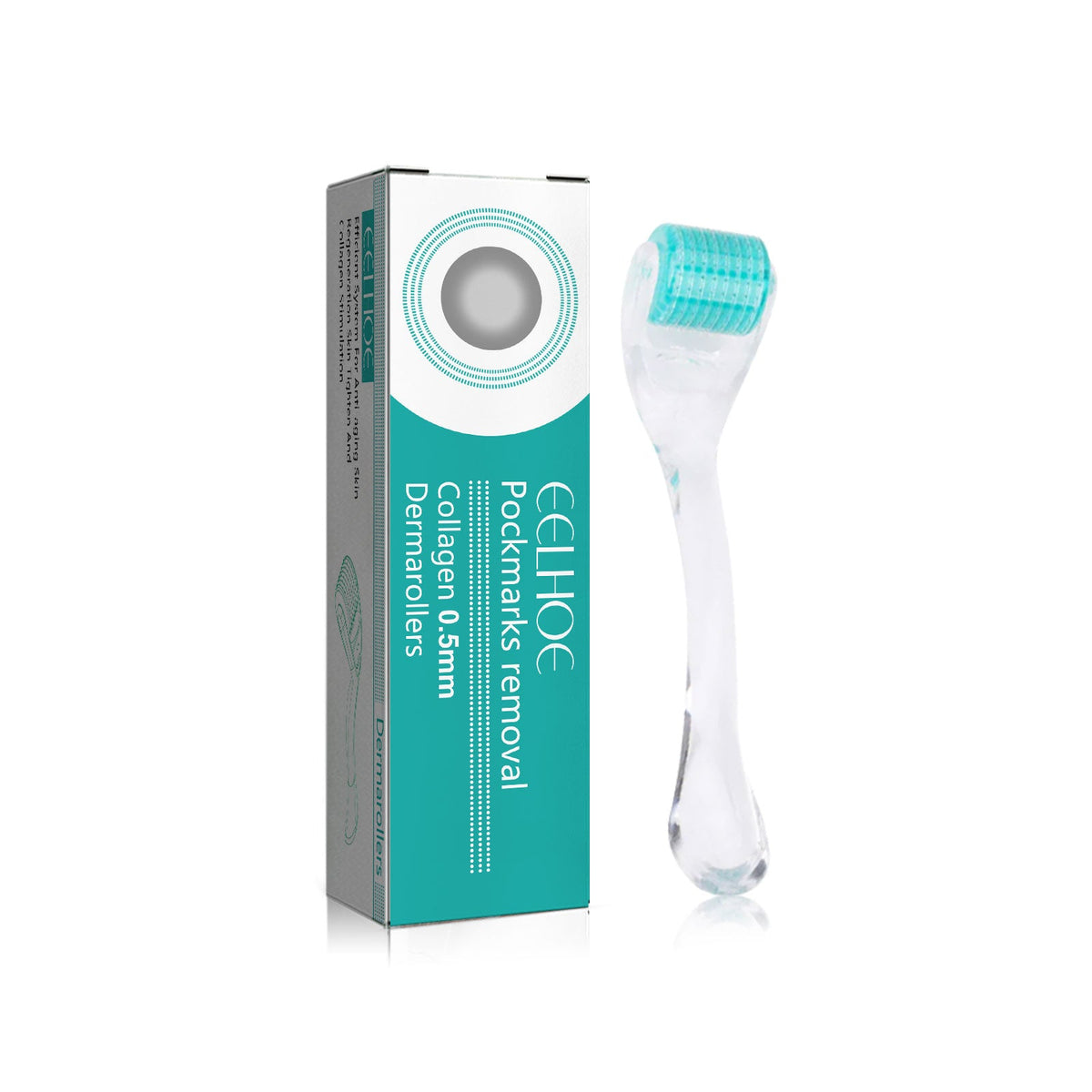
White ergonomic handle and turquoise medical-grade roller head
Compact white and turquoise box with educational diagrams and specs
Every morning she looks in the mirror and sees the same pitted scars concealer can hide but never solve. Camera flash and side lighting catch every shadow, and the routine becomes a daily negotiation with distance and angle.
Full-coverage foundation fills and blurs, but it doesn't rebuild. Scar creams and occasional facials fade because their actives never reach the depth where scar tissue actually remodels. The appearance improves for a day, then the texture is right back.
This is built for a specific depth. Not a vague micro-needle claim. 0.5mm is deep enough to create the micro-channels associated with collagen response, the same zone professionals target for scar change, in a tool shaped for your own hand.
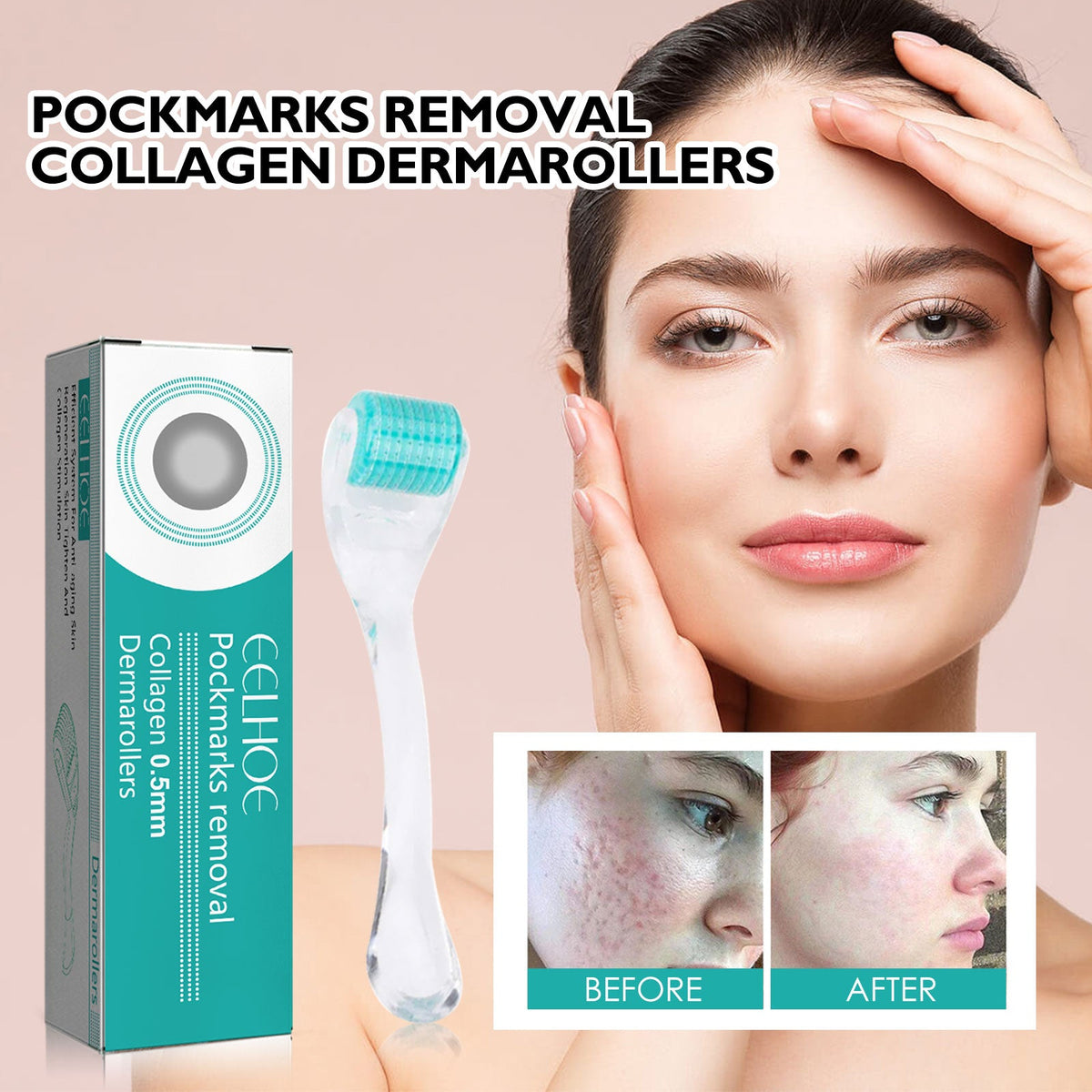
No overnight promises here. Real texture change is cumulative. One weekly session, a simple pattern of passes, a hydrating serum after. By week eight, many people notice the edges of old scars look softer in the mirror. By week twelve, the change feels undeniable.
Yes, 0.5mm is considered an at-home depth when used correctly on clean, intact skin. It does not reach the deeper layers where numbing or professional supervision is required. Follow the once-a-week protocol, avoid open skin, and sanitize the roller before and after each session.
It is designed for established scars and pockmarks, not just fresh marks. The 0.5mm depth targets the dermis where old scar tissue sits. Change is slower for older scarring, which is why the expectations are set over months, not days. Consistent weekly use is what gives the skin repeated signals to remodel.
Most cheap rollers advertise a vague micro-needle effect without naming depth, and their needles are often uneven or flimsy. This one specifies 0.5mm on the packaging, the depth associated with scar remodelling, and uses a clinical turquoise medical-grade head on an ergonomic grip. You are paying for a named specification you can verify, plus a second roller as backup.
Most people describe a light prickling or sandpaper feeling, not pain. Expect some pinkness for an hour to a few hours afterwards. By the next morning skin is typically calm and makeup-ready. If a session leaves you very red and irritated, you are pressing too hard or rolling too many passes.
Immediately after rolling, stick to gentle hydrating serums like hyaluronic acid or a basic barrier-support product. The channels open by rolling can make strong actives like retinol, vitamin C or exfoliating acids more irritating if applied right away. Use those the next day, not the same night. A lightweight facial oil can also lock in hydration after the roller.
Once a week. At 0.5mm depth, skin needs about seven days to complete its response cycle. More often does not speed results and can cause chronic irritation. Most people begin to feel smoother texture around week four and see visible softening of scar edges around week eight to twelve.


 0.5mm Micro-Needle Face Roller for Acne Scars & Lines