Bruise Treatment Gel & Therapy for Fast Bruise Healing
1 items


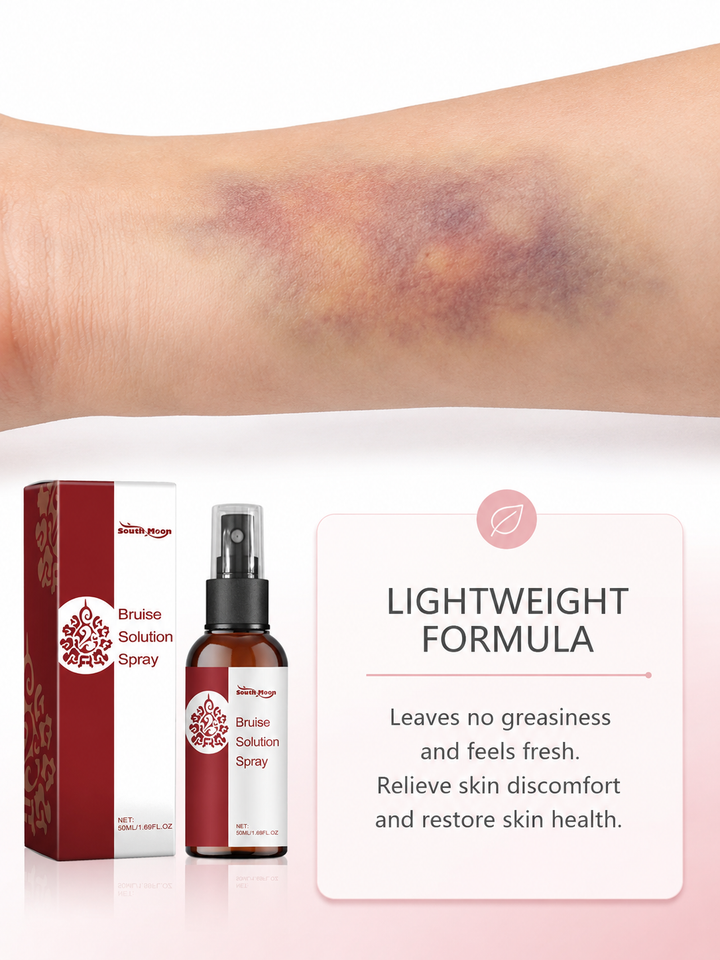
Bruise care products are designed to support comfort while a bruise naturally changes and fades. This guide explains how to choose and use bruise relief spray, what to expect during bruise healing stages, and when a bruise may need professional attention.
How to choose bruise treatment spray
When comparing bruise treatment options, start with the product format and the area you want to treat. Bruise Relief Spray — Soothe & Heal Bruises Faster is useful when you prefer a quick, no-rub application over a cream or gel. A spray can be convenient for arms, legs, and other areas where touching the skin feels uncomfortable. Check the label for directions, application frequency, skin-area restrictions, and ingredient information. For facial bruising, use only if the label specifically allows facial application, and avoid the eyes, lips, broken skin, and irritated areas. No topical product can remove a bruise overnight, so choose a format that makes consistent, gentle bruise care easy.
Bruise gel, cream, or spray: which type is right?
Bruise gels and creams are applied directly with the fingers, while a bruise relief spray offers a touch-free alternative. A cream may suit shoppers who prefer a richer texture, whereas a gel often feels lighter on the skin. Spray is a practical choice when you want fast application without massaging a tender area. The best option depends on your comfort, the location of the bruise, and the instructions provided with the product. For deep bruise treatment, topical products should be viewed as part of supportive care rather than a guaranteed quick fix. Compare texture, application method, scent, and skin compatibility before buying, especially if you are treating a visible bruise on the face.
What to look for in bruise care products
Look for clear directions, a straightforward spray application, and guidance about where the product can be used. Ingredient details matter if your skin is sensitive or you already use other topical products. Choose packaging that allows controlled application and is easy to use without pressing hard on a sore area. It is also helpful to check storage instructions and the product’s cautions before purchase. Bruise causes vary, including minor bumps, pressure, or procedures, so consider whether the product fits the situation described on its label. If bruises appear often without an obvious cause, product shopping should not replace medical advice. A well-chosen spray should complement gentle handling and normal healing.
How to use bruise relief spray
Read the product label before each use and apply only as directed. Clean and dry the area if the instructions recommend it, then hold the spray at the stated distance and use the recommended amount. Avoid spraying near the eyes, mouth, open wounds, or damaged skin unless the label specifically says otherwise. Do not vigorously rub a fresh or painful bruise simply to spread the product. If you are considering ice for a new bruise or hematoma, use a wrapped cold pack for short periods rather than placing ice directly on skin, and follow healthcare guidance for significant injuries. Stop using the spray if irritation develops and seek advice when symptoms are severe or worsening.
Common bruise care mistakes to avoid
A common mistake is expecting a bruise treatment cream, gel, or spray to make a bruise disappear overnight. Bruises normally change color as trapped blood is gradually processed, so appearance alone does not show exactly how serious an injury is. Avoid applying products to broken skin, layering several topical treatments without checking compatibility, or massaging a painful area forcefully. Do not use a product outside the body area or age range listed on its label. Shoppers also sometimes ignore the original injury and focus only on color changes. Keep track of increasing pain, swelling, warmth, numbness, limited movement, or bruising without a clear cause, and contact a healthcare professional when appropriate.
Who is bruise relief spray best suited for?
Bruise Relief Spray may suit adults looking for a convenient, touch-free addition to everyday bruise care after a minor bump, provided the product label matches their intended use. It can be especially practical for people who dislike rubbing a tender area or prefer a lightweight spray over a cream. Check with a healthcare professional before use on children, during pregnancy, after a procedure, or alongside prescribed skin treatments. The spray is not a substitute for assessment of a serious injury, a rapidly expanding bruise, or repeated unexplained bruising. It also should not be used to delay care when a bruise is accompanied by severe pain, significant swelling, weakness, or other concerning symptoms.
Frequently asked questions
How do I help a bruise heal faster?
Protect the area from further bumps, rest it when needed, and follow the product label if using a bruise relief spray. A wrapped cold pack may be useful soon after a minor injury, while direct ice contact and vigorous rubbing should be avoided. Bruises heal at different rates, so no topical product can guarantee overnight fading.
Should you ice a hematoma?
For a minor, recent injury, a cold pack wrapped in cloth may help with comfort when used as directed. Do not place ice directly on the skin or press hard on a painful area. A large, expanding, very painful, or unexplained hematoma should be assessed by a healthcare professional rather than managed only with home care.
What are the different stages of healing for a bruise?
A bruise may begin red or purple, then shift through blue, green, yellow, or brownish tones as it fades. The sequence and timing vary by the person, injury, location, and depth of the bruise. Color changes are common, but worsening pain, swelling, or other symptoms deserve medical attention.
What does it mean when a bruise turns yellow?
Yellow coloring often occurs as a bruise changes during the fading process. It does not by itself indicate the exact age or severity of the bruise. Consider the full picture, including pain, swelling, size, and whether the bruise had an obvious cause.
What's the worst color bruise to have?
There is no single bruise color that reliably means a bruise is the worst. Color can change naturally as the bruise heals, and deeper bruises may look different from surface bruises. Seek medical advice for severe pain, increasing swelling, restricted movement, repeated unexplained bruising, or a bruise after a significant injury.
What color is a 3-day-old bruise?
A three-day-old bruise may still look red, purple, or blue, and some bruises may begin showing green or yellow tones. There is no dependable color chart for dating every bruise because healing varies by injury and location. Use the product only as directed and focus on symptoms rather than color alone.