
$59.90
Free delivery · 7–14 days
Logic Puzzle Card Game for Screen-Free Early Learning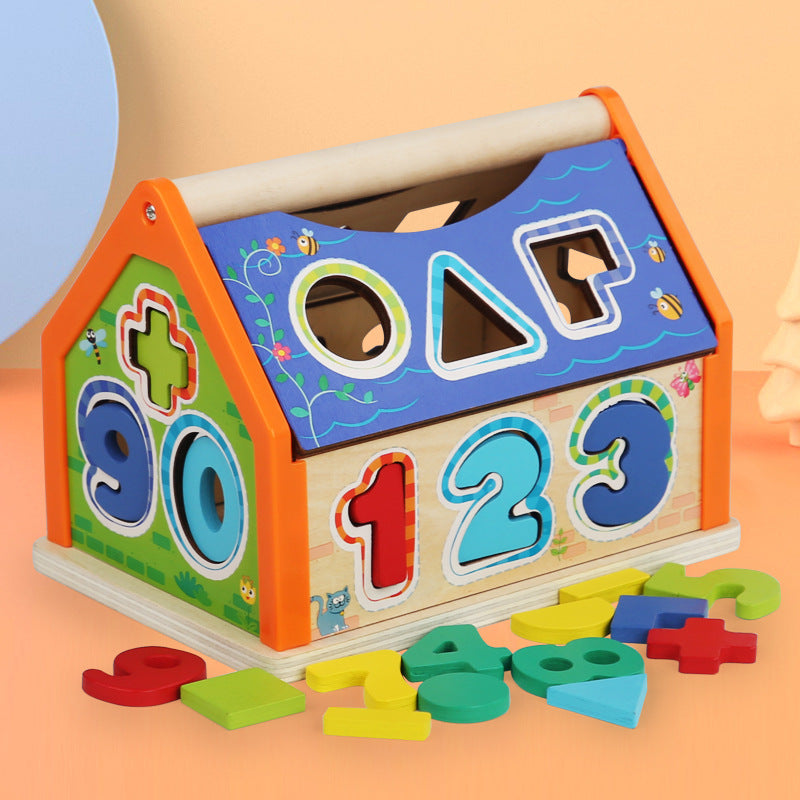
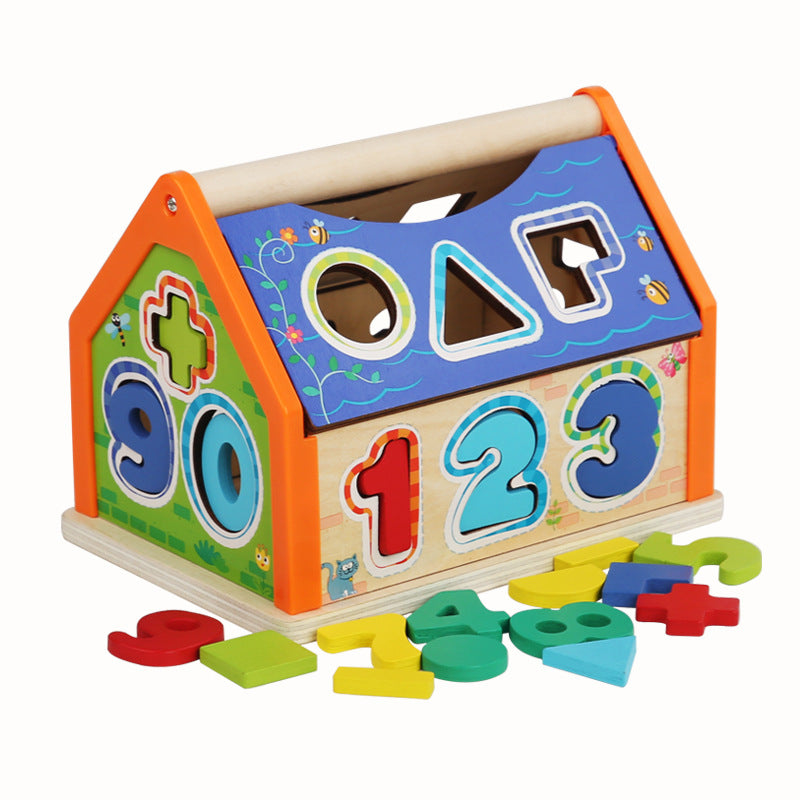
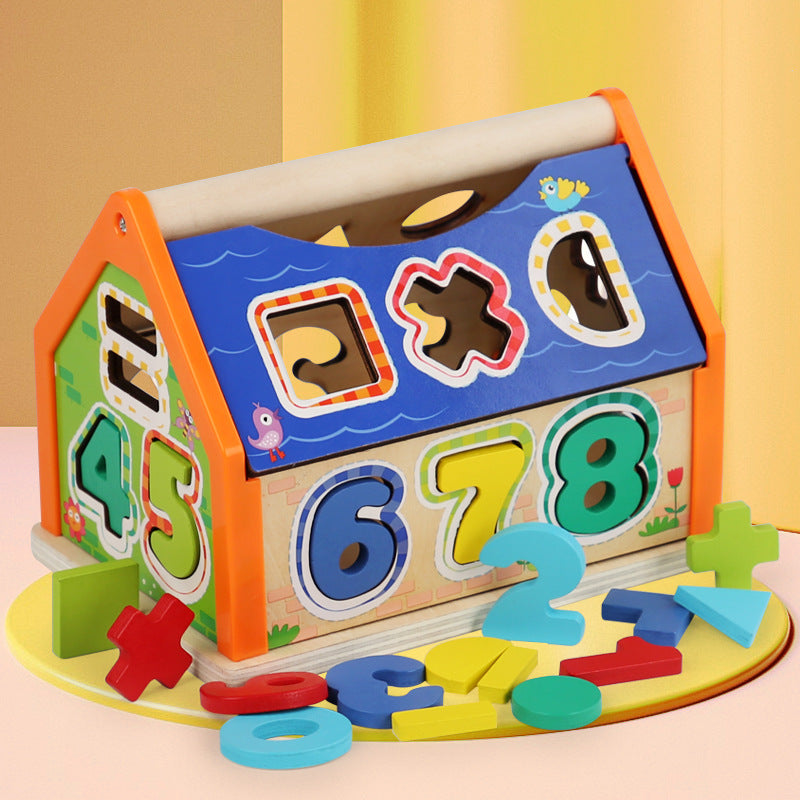
Turn early shape, color, and number practice into play little hands want to repeat. This colorful wooden activity house gives toddlers and preschool children a screen-free way to sort, match, carry…
Read the full descriptionTurn early shape, color, and number practice into play little hands want to repeat. This colorful wooden activity house gives toddlers and preschool children a screen-free way to sort, match, carry…
A multi-activity wooden learning house for shape sorting, number recognition, and hands-on early development
Replace scattered, screen-dependent play with a colorful learning house that gives little hands a satisfying way to explore shapes, numbers, and colors.
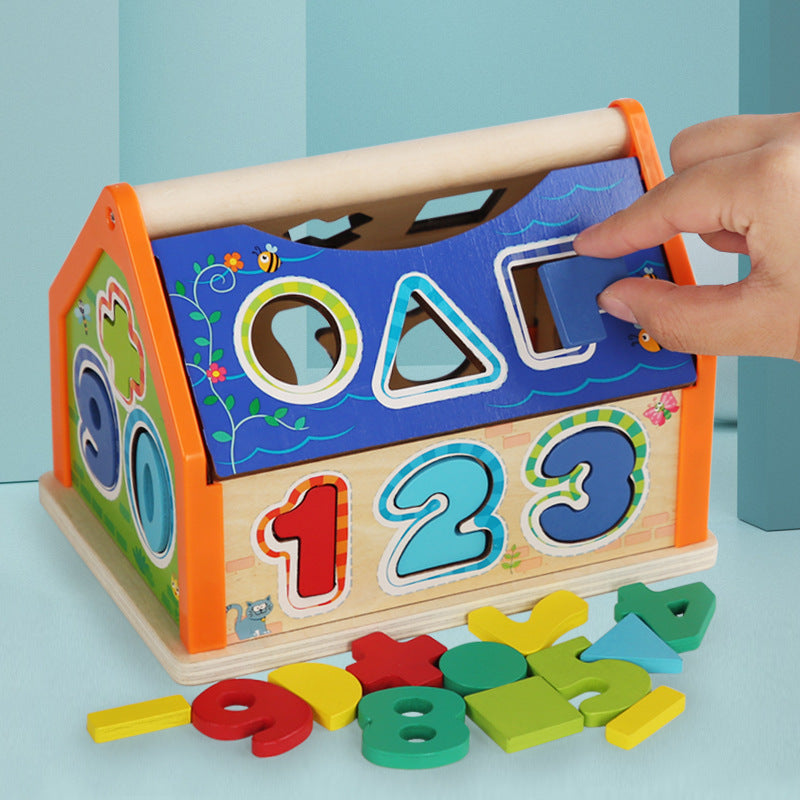
Geometric openings and removable circles, triangles, squares, crosses, and other basic shapes make recognition physical and repeatable. Children can pick up a piece, turn it, compare its outline, and try the opening that fits.

Number pieces 1 through 9 give children a hands-on way to connect numerals with matching openings instead of only looking at cards. The bright pieces make it easy to point, name, compare, and place.

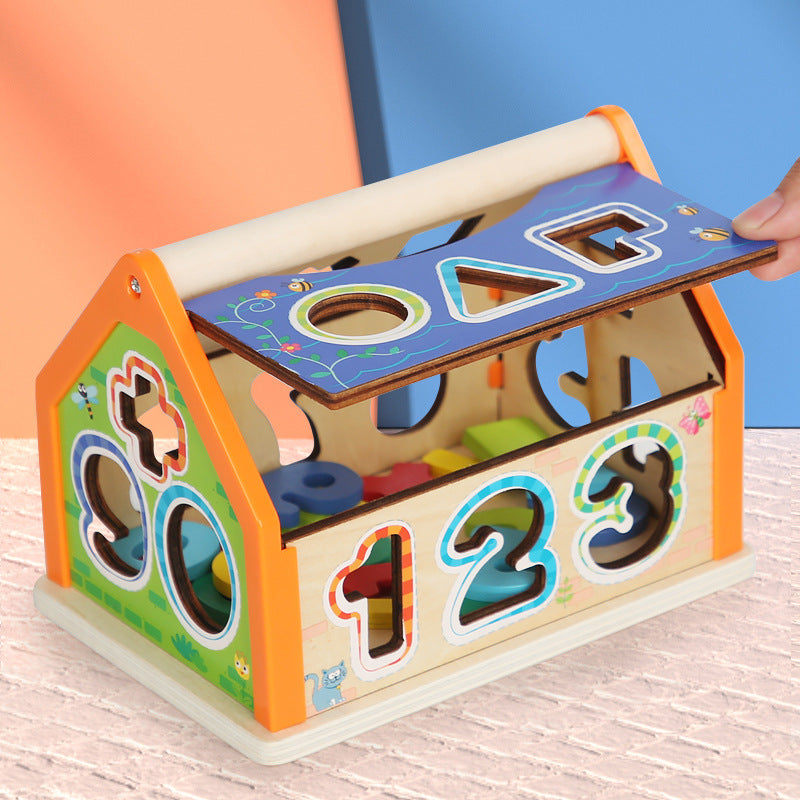
The integrated carry handle and house-shaped design make it easy to bring a purposeful activity from shelf to play area. The lift-up roof also gives children a simple way to discover and organize the pieces.

Smooth painted panels, rounded edges, and sturdy wooden construction create an inviting toy children can return to often. The detailed illustrated house keeps the activity feeling like play rather than a formal lesson.
Set out the house and a few colorful pieces. Let your child handle, turn, compare, and name what they notice without correcting every attempt.
Choose one easy shape or number and invite your child to find the opening. Offer a simple clue if needed, then celebrate the attempt.
Bring in additional shapes and numbers as interest grows. Talk about colors, outlines, and numerals while your child sorts the pieces.
Lift the roof, return the loose pieces to the house, and let your child carry it back to its shelf with an adult nearby.
House-shaped activity base with matching openings, lift-up roof panel, and carry handle.
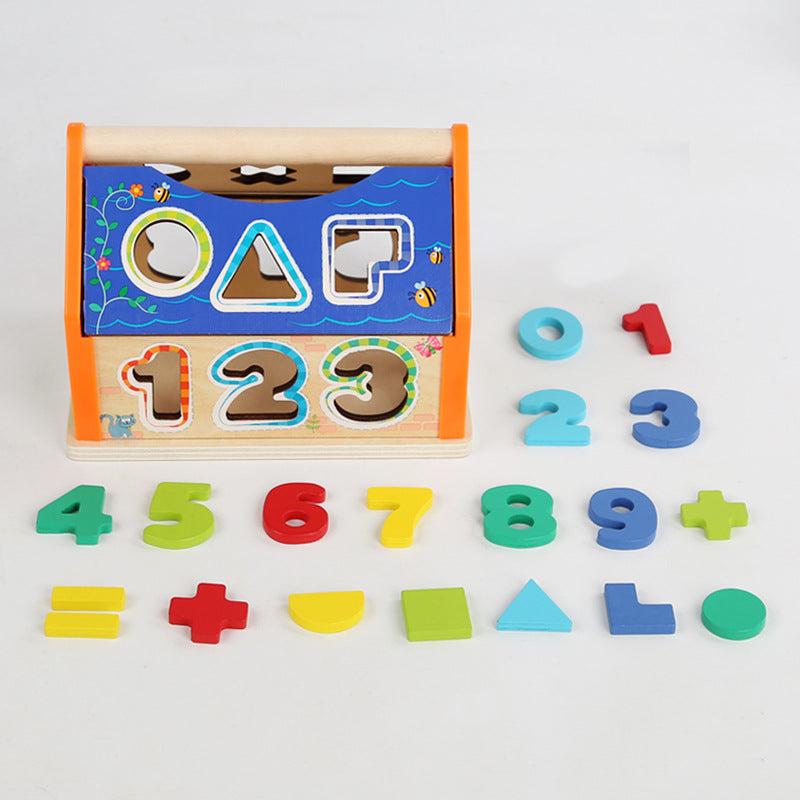
Removable number pieces for hands-on numeral matching.
Includes circles, triangles, squares, crosses, and other basic shapes.
Worksheets can feel like a task, while screens offer stimulation without much tactile practice. A young child needs a reason to hold, turn, compare, and try again. This house gives early shapes and numbers a place to become something they can actually touch.

The activity begins with free exploration, then naturally moves into matching. Children sort colorful geometric pieces, find number openings, lift the roof, and carry the house to a new play spot. It turns a simple learning moment into a repeatable routine.
The right piece drops into the right opening, and the idea suddenly makes sense. A child can try one more shape, name another color, or look for the next numeral. With an adult nearby or during independent play, each small match keeps curiosity moving.
| Learning house | Basic sorter | Flashcards | |
|---|---|---|---|
| Shape matching | Partial | ||
| Number matching | Partial | ||
| Hands-on removable pieces | — | ||
| Multiple activities in one toy | Partial | — | |
| Carry handle | Partial | — | |
| Wooden construction | Partial | — |
It is made for toddlers and preschool children beginning shape, color, and number recognition. The pieces are removable and hands-on, so young children should use the toy with active adult supervision.
The set includes the wooden shape-and-number house, number pieces 1 through 9, and geometric shape pieces including circles, triangles, squares, crosses, and other basic shapes.
Yes. The number set runs from 1 through 9, giving children a clear sequence to explore through matching play.
Children can practice circles, triangles, squares, crosses, and other basic geometric shapes using the corresponding openings.
The house has smooth painted wooden panels and rounded wooden edges. Inspect the pieces regularly and supervise play, especially with very young children.
The integrated carry handle makes the house easy to move between a shelf, play area, or classroom station. An adult should guide carrying for children who are still unsteady.


 Wooden Shape Sorter House for Early Learning Play