
$64.90
Free delivery · 7–14 days
Wooden Spelling Maze Board for Montessori Word Play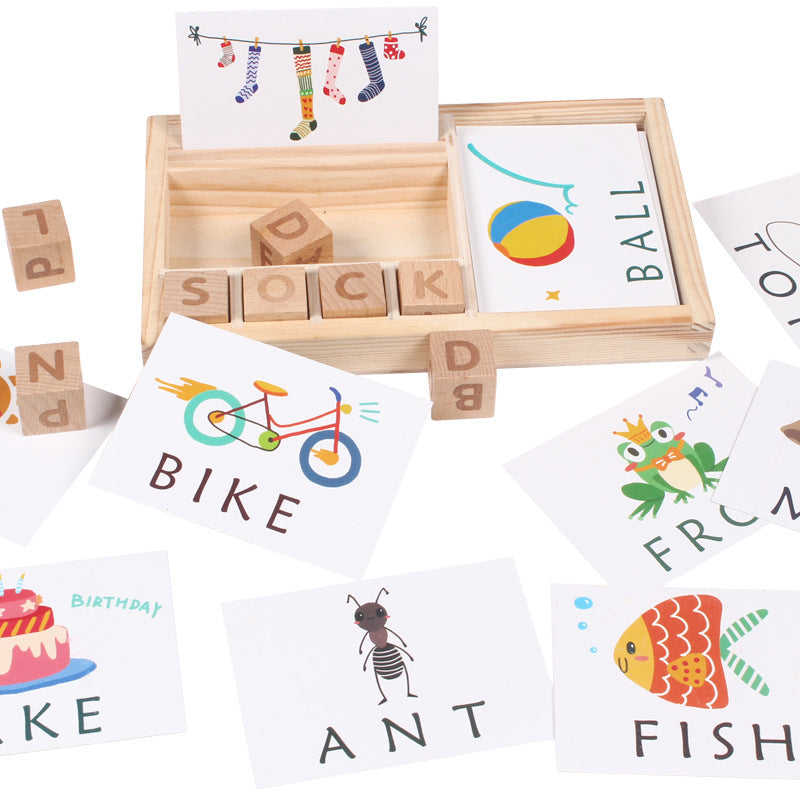
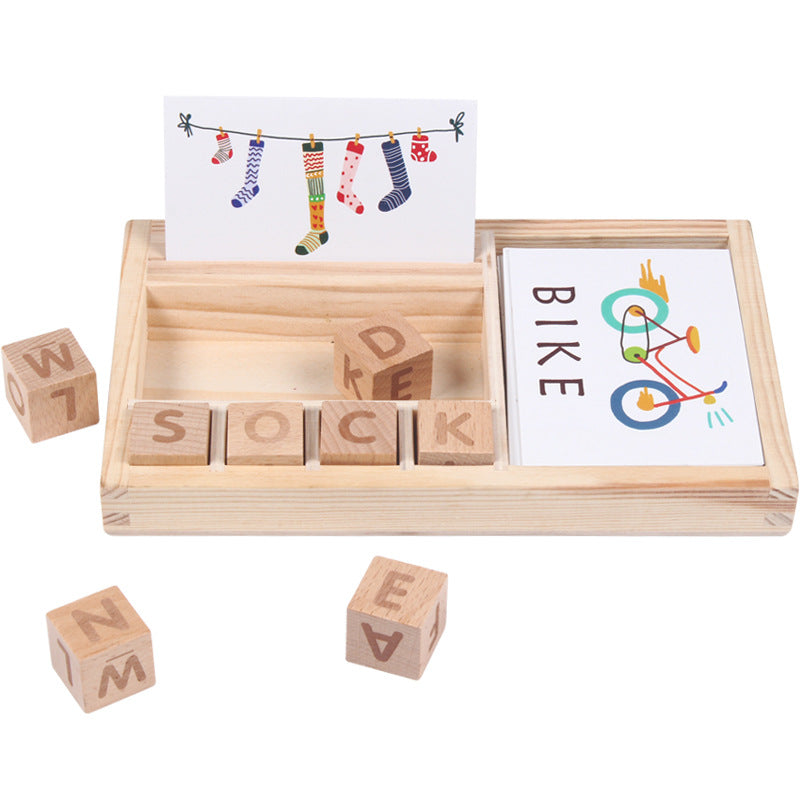
Turn picture matching into a proud first step toward English spelling. This wooden word puzzle gives children colorful cards, chunky engraved letters, and a tidy tray for screen-free practice.
Read the full descriptionTurn picture matching into a proud first step toward English spelling. This wooden word puzzle gives children colorful cards, chunky engraved letters, and a tidy tray for screen-free practice.
Hands-on English word building through playful picture matching
Move from screen-dependent practice and letter confusion to hands-on spelling play. Children match colorful picture cards, arrange engraved blocks, and see words take shape.
Illustrated vocabulary cards give children a meaningful target, connecting a familiar object or idea with the letters needed to spell it. It brings the same friendly spirit as other kids toys educational, with a clear word-building purpose.
Smooth rounded wooden blocks with engraved letters give children a physical way to handle, inspect, arrange, and rearrange letter forms. The weight and shape make each spelling attempt feel active rather than passive.
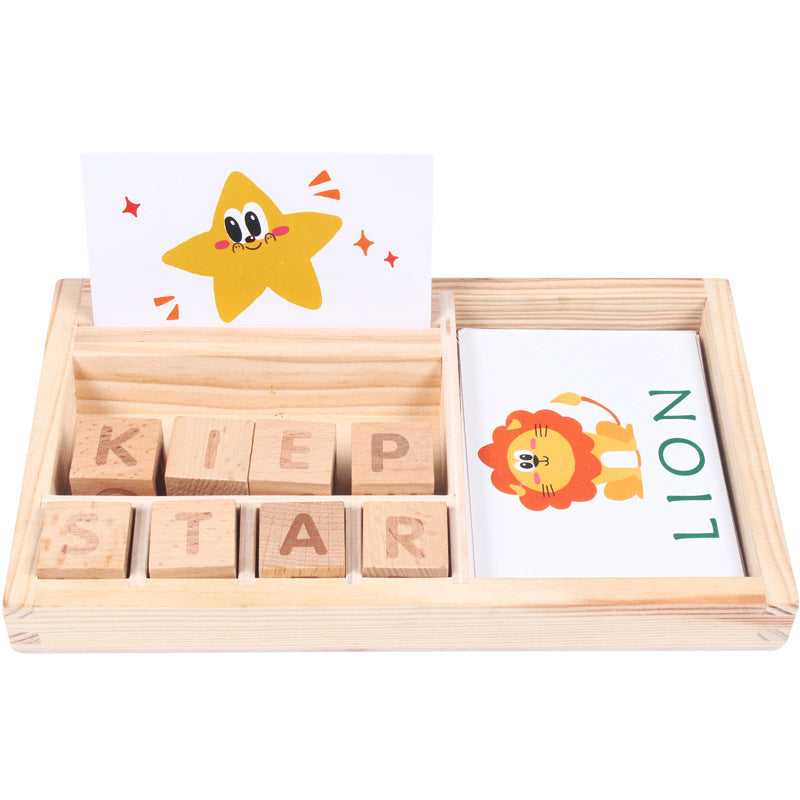
Multiple compartments create a clear place for the pieces and turn setup, building, and cleanup into a manageable routine. It is a more complete setup than loose letters scattered across a table.
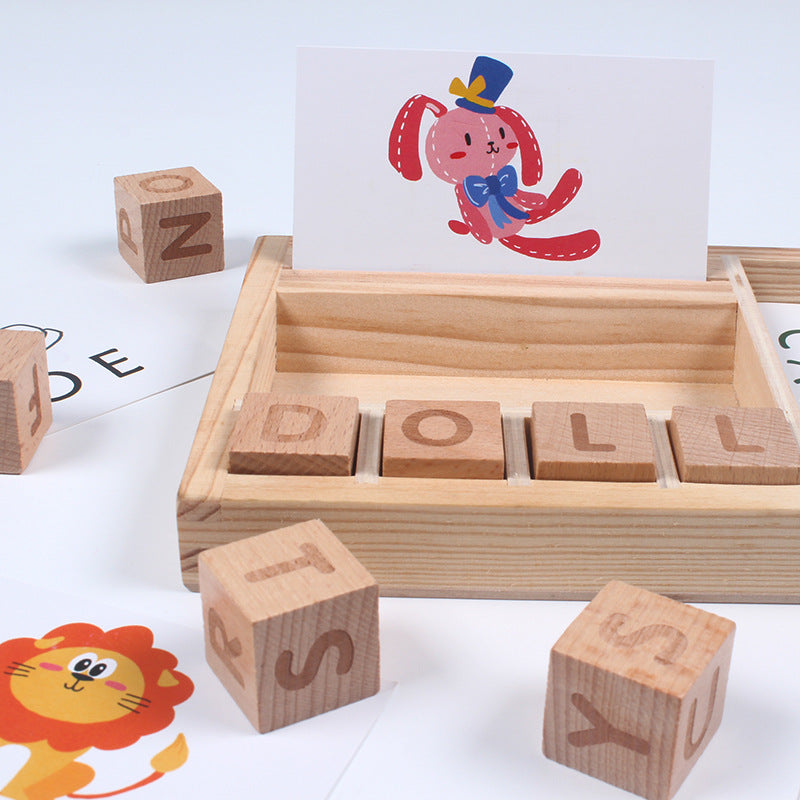
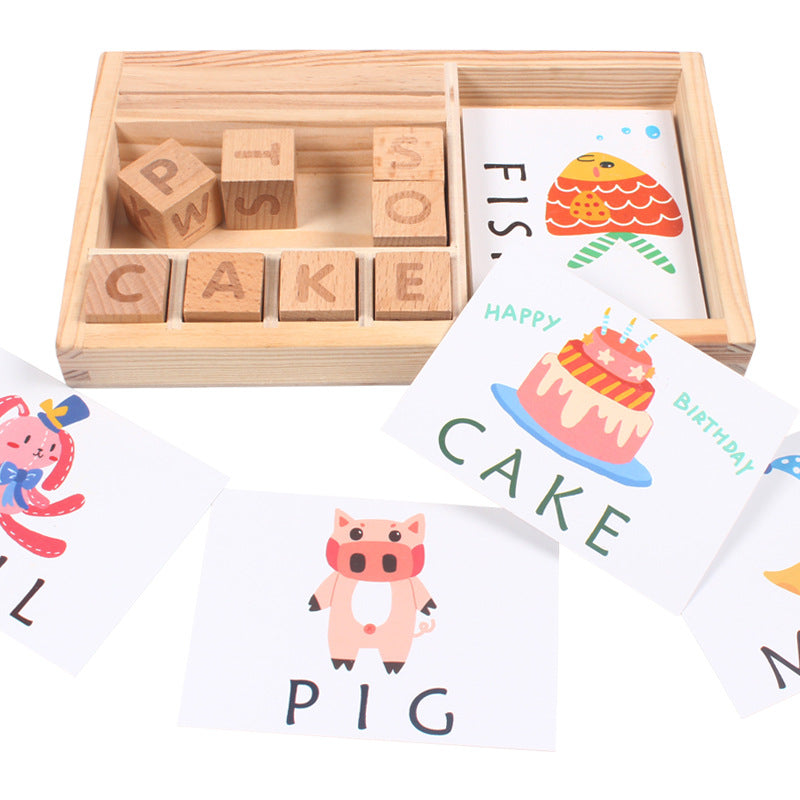
Completed examples such as BIKE, CAKE, PIG, and DOLL let children see the result of their effort and share a finished word. That small moment of recognition gives them a reason to try again.
Place an illustrated vocabulary card beside the tray and name the object together.
Look through the engraved wooden blocks and pick the letters that belong to the pictured word.
Arrange the blocks in order, using the picture as a friendly clue rather than treating the activity like a test.
Run a finger across the finished word, sound it out, and celebrate the completed build before returning the pieces.
Compartmentalized tray for organizing the activity.
Chunky engraved pieces for arranging English words.
Colorful picture prompts that connect objects with words.
Letter practice is hard to sustain when children cannot connect individual shapes with something meaningful. A worksheet or loose pile of alphabet pieces can leave them guessing instead of seeing how letters become a word.
The picture card gives the activity a clear starting point. Children name what they see, find the matching engraved letters, and arrange them in the tray. Spelling becomes a playful sequence instead of an abstract task.
When the blocks spell BIKE, CAKE, PIG, or DOLL, the result is right there in front of them. That visible finish gives children a reason to read the word aloud, show an adult, and reach for another card.
The tray keeps the activity ready for another round at home, in a preschool classroom, during travel, or in a quiet corner. It gives families a reusable screen-free routine with a clear learning purpose.
Return letter blocks to the wooden tray after each session.
Stack the illustrated vocabulary cards beside the tray between uses.
Use the natural wood set on a clean, dry table or play surface.
Make sorting and cleanup part of the learning routine.
| Wooden word puzzle | Loose letters | Flashcards | |
|---|---|---|---|
| Picture cue for each word | Yes | No | Partial |
| Hands-on letter arranging | Yes | Yes | No |
| Organized tray | Yes | No | No |
| Visible completed word | Yes | Partial | No |
| Screen-free practice | Yes | Yes | Yes |
| Reusable learning activity | Yes | Yes | Yes |
It is best suited to preschool and early-primary children ages 3-7 who are learning English letters, simple spelling, and vocabulary. Younger children should use it with an adult nearby.
The picture cards give children a clear starting point, so the activity can become more independent with practice. Adult guidance is useful at first for naming the picture, sounding out letters, and encouraging attempts.
The set includes a wooden sorting and display tray, wooden engraved letter blocks, and illustrated vocabulary cards.
Flashcards provide picture prompts but do not give children letters to arrange. Worksheets are less tactile, while loose alphabet blocks lack the guided card-and-tray structure. This set brings the picture, letters, and organized building space together, making the premium materials useful across repeated practice sessions.
The blocks have a chunky wooden form with smooth rounded edges, giving young children a tactile piece to pick up, inspect, and arrange. Adult supervision is still appropriate for younger users.
Yes. It fits supervised preschool literacy stations, parent-child lessons, quiet time, and screen-free travel. The contained tray keeps the activity more manageable than loose pieces.


 Wooden English Word Puzzle for Hands-On Word Learning