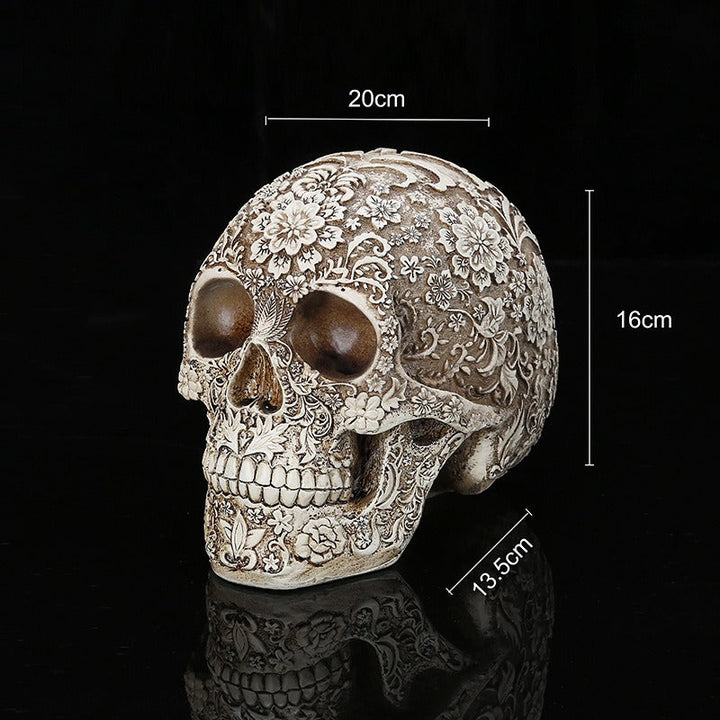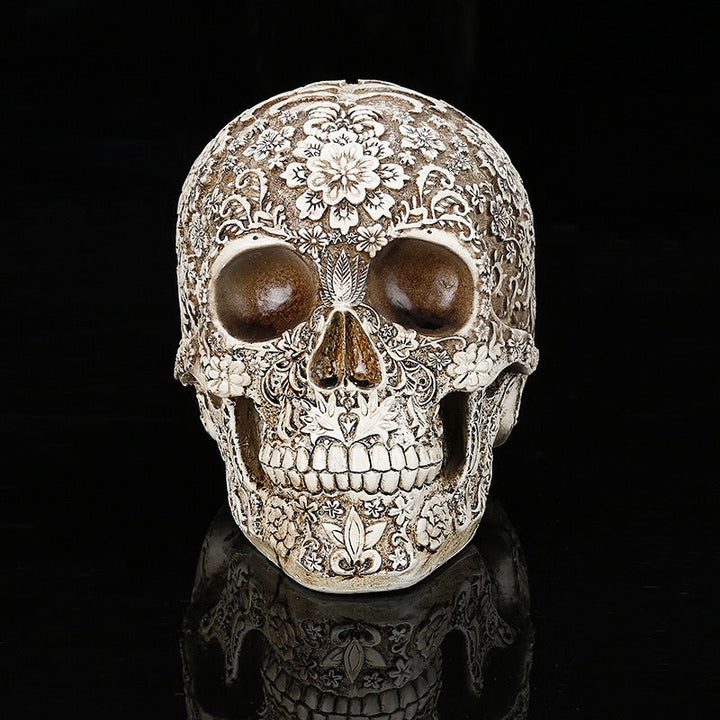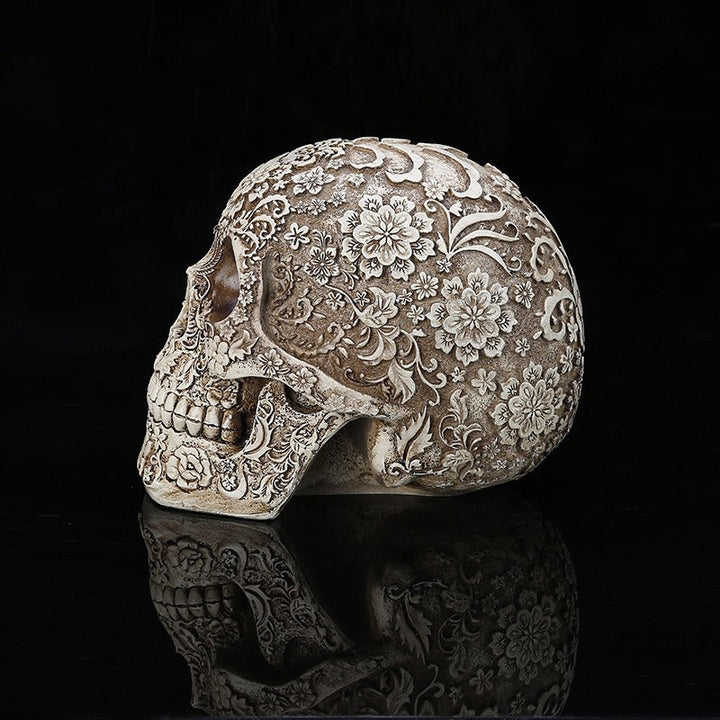
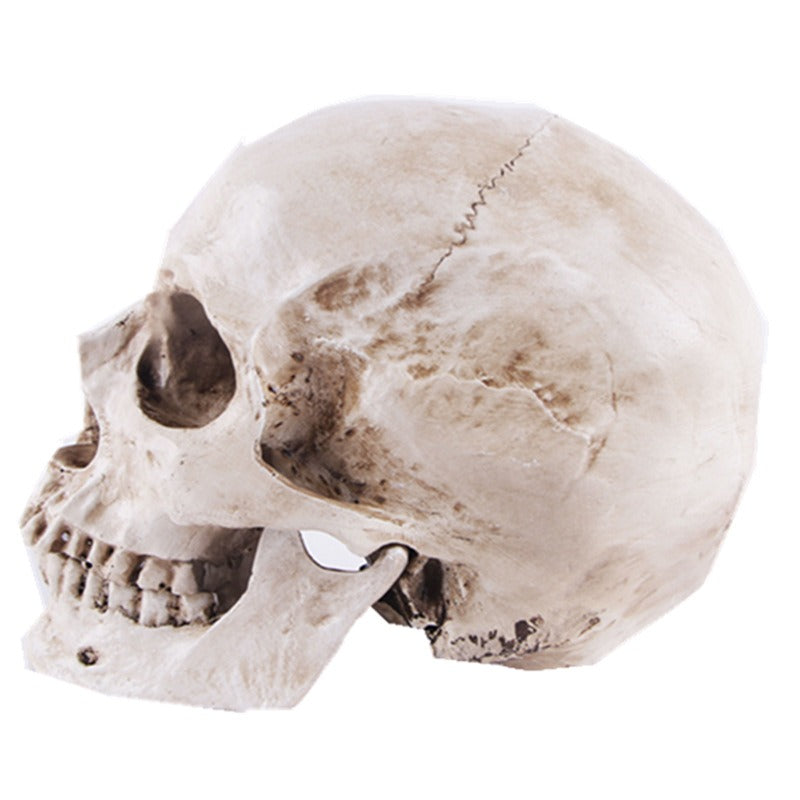
Resin Skull Model for Anatomy Teaching and Study Aid
Make skull anatomy easy to see
Replace flat diagrams and vague mental pictures with a lifelike three-dimensional skull reference. Study visible teeth, sutures, cavities, and jaw structure from every angle.

Built For Visual Learning
The value is in the landmarks you can see and the dimensional form you can examine.

Study the landmarks
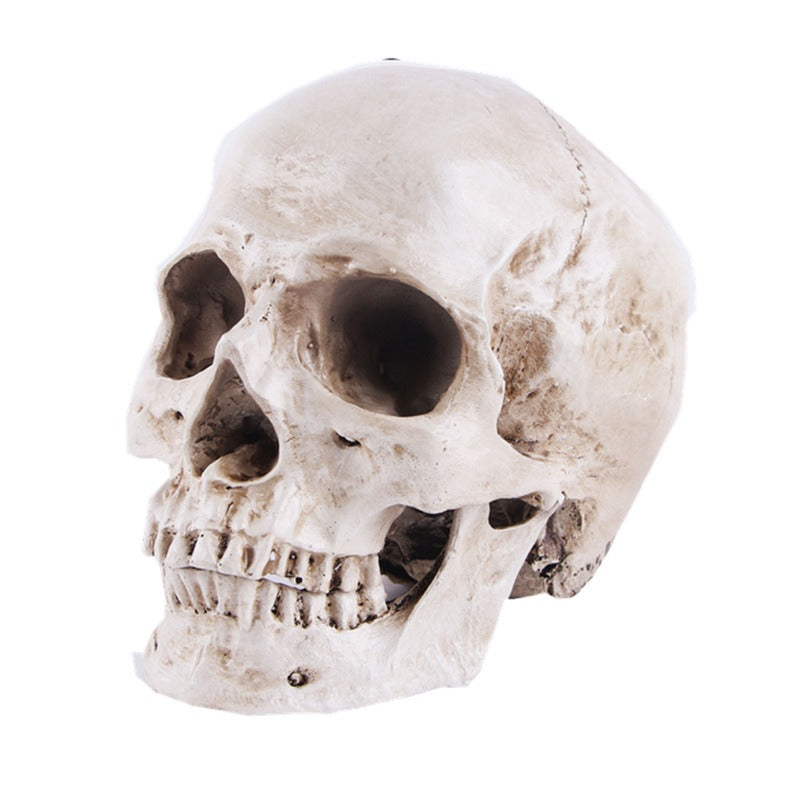
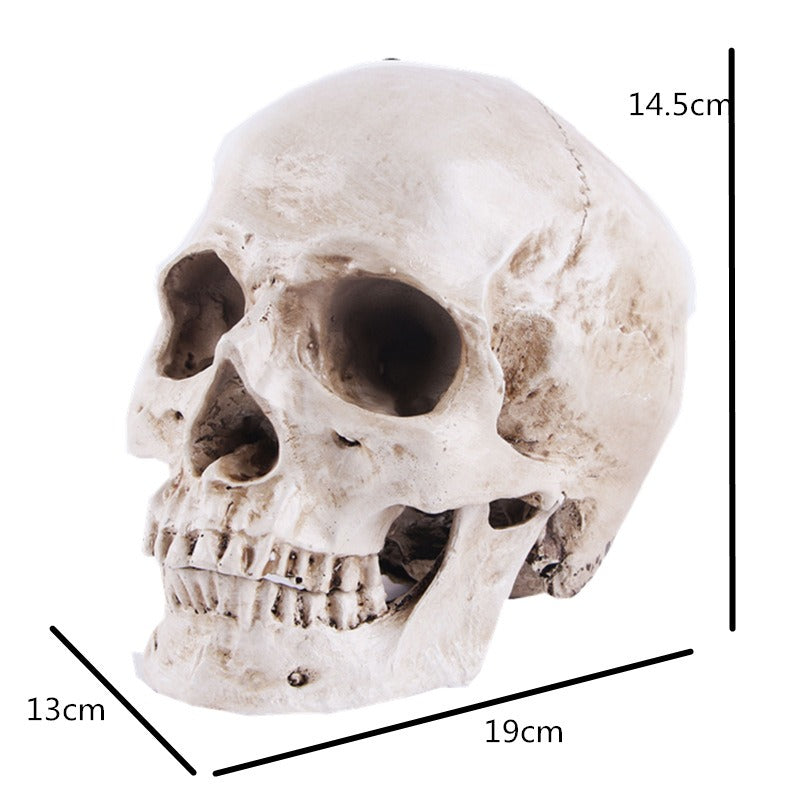
Clearly visible teeth, cranial sutures, hollow eye sockets, nasal cavity, and jaw structure give learners concrete features to identify. The sculpting makes a skull model for anatomy teaching more useful than a plain decorative replica.

See it in three dimensions
The dimensional skull form lets learners examine how visible structures relate beyond a single textbook angle. It gives students a steady reference to revisit during revision instead of relying on changing phone images.
Teach with confidence
A physical reference gives teachers a reusable visual aid for demonstrations, discussion, and student observation. It is a teaching model for visual study, not a substitute for approved specimens or clinical equipment.
Display with character
Matte ivory and antique beige coloration with dark recessed shadowing gives the model a museum-style, gothic, or seasonal display presence. The anatomical detail keeps it more considered than a generic Halloween skull.
Use It To Learn Anatomy
A simple observe, label, and revisit method turns the model into a repeatable study reference.
Observe the form
Rotate the skull slowly and look at the teeth, eye sockets, nasal cavity, jaw, and cranial sutures before checking your notes.
Name each landmark
Point to one visible structure at a time and connect it with the term from your textbook, lecture, or approved anatomy reference.
Revisit from another angle
Change the viewing angle and find the same structures again. This builds a clearer sense of how the landmarks relate in three dimensions.
Use it to self-quiz
Cover your notes and identify landmarks from memory, or place the model at the center of a study-group discussion.
Why A Real Model Helps
Choose the format that matches the way you need to learn or display skull anatomy.
| Resin skull modelBEST FOR 3D STUDY | Flat anatomy diagram | Generic decorative skull | |
|---|---|---|---|
| Three-dimensional form | ✓ | ✗ | ✓ |
| Visible teeth and jaw structure | ✓ | Partial | Partial |
| Defined cranial sutures | ✓ | Partial | ✗ |
| Useful for classroom discussion | ✓ | ✓ | ✗ |
| Works as a display piece | ✓ | ✗ | ✓ |
What You Receive
The centerpiece is a single detailed resin skull model for study or display.
Anatomy Beyond Flat Diagrams
A physical reference connects memorized labels with the structures they describe.
When Diagrams Fall Short
Flat illustrations show isolated labels, but they cannot give you the full sense of how the skull's cavities, teeth, sutures, and jaw sit together. That gap makes three-dimensional anatomy harder to picture and remember.

A Reference You Can See
This resin skull gives abstract terms a visible form. Rotate it, follow the cranial sutures, inspect the nasal cavity, and compare the jaw structure with your notes from more than one angle.

Study, Teach, Display
Keep the model beside study materials, bring it into a classroom discussion, or place it on a shelf as a considered realistic skull display. Its matte aged-bone finish gives the anatomy a clear visual presence without looking like a generic seasonal prop.
About this item
Turn abstract skull anatomy into something you can see, rotate, and revisit. This detailed resin model works as a study aid, classroom reference, drawing subject, and realistic gothic display.
Realistic three-dimensional resin skull model for anatomy teaching and dramatic display
- limited access to physical anatomy specimens
- need for a visual classroom teaching aid
- plain or generic decorative displays
Questions Before Choosing
The practical details, plainly answered.
Explore more
Browse adjacent collections for teaching, making, display, and seasonal styling.
You might also like