Children's Addition & Subtraction Finger Math Toy Set
Turn abstract equations into hands-on wins
When numbers feel too abstract, children can build, touch, and count each equation. This tactile set turns early addition and subtraction practice into playful parent-child learning.

Math They Can Actually Touch
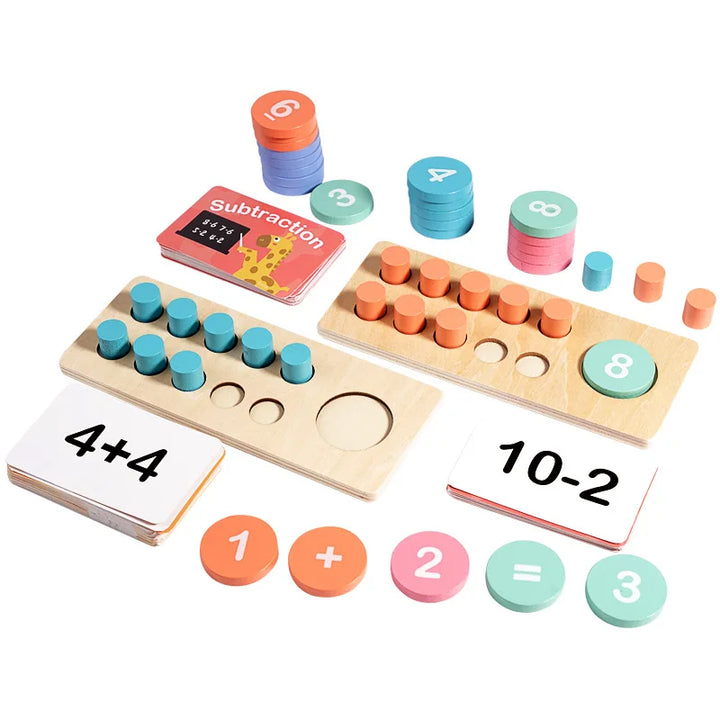
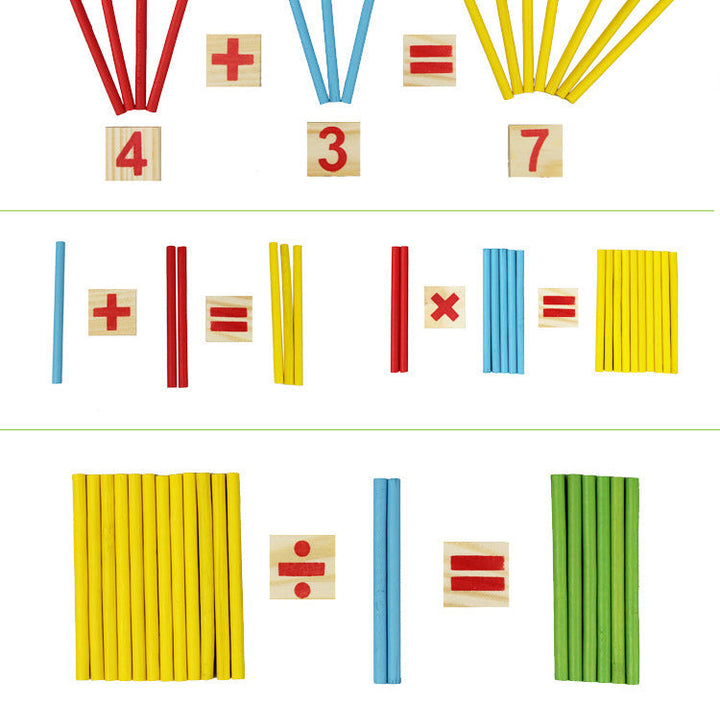
Every part gives children another way to connect a symbol with a quantity, keeping the lesson visible and the mood playful.

Count With Real Fingers
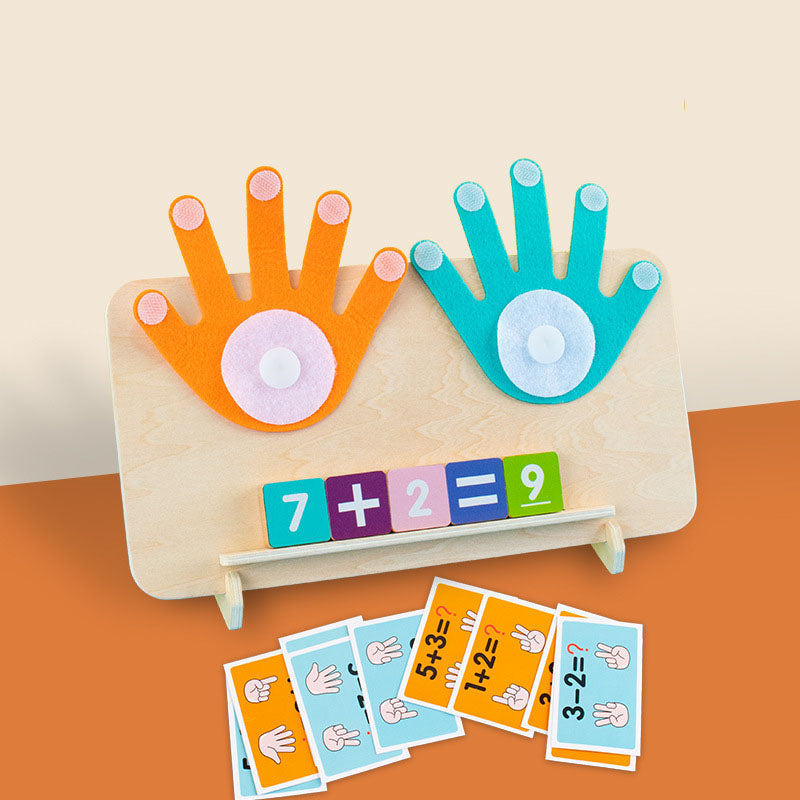
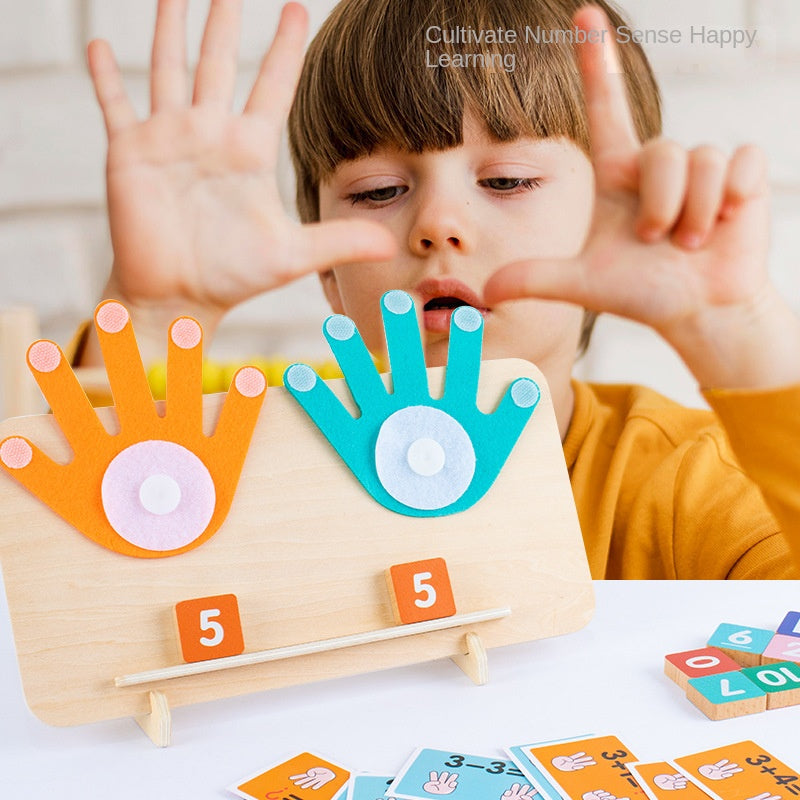
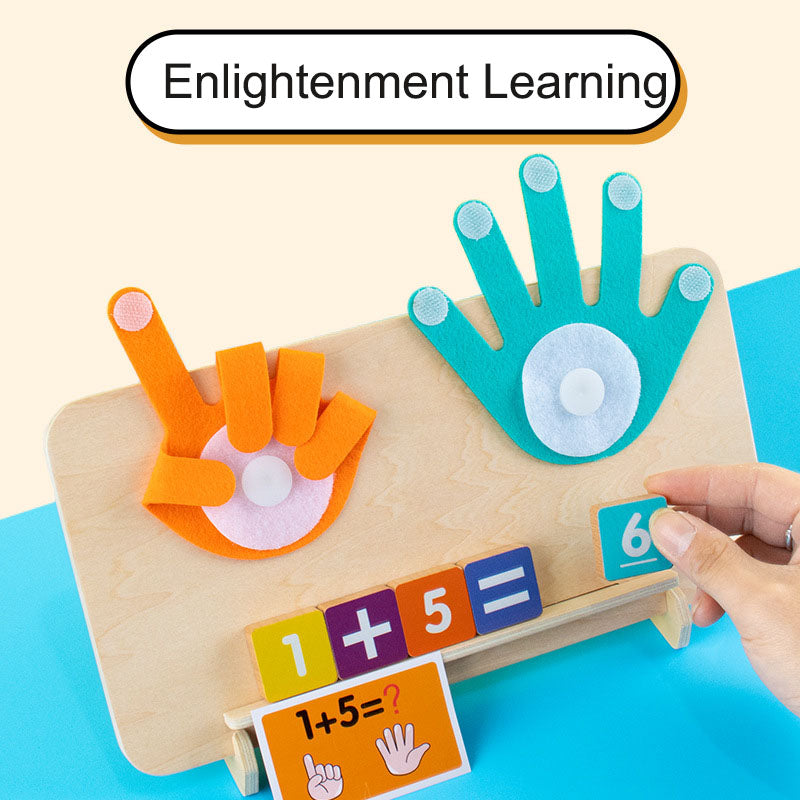
Two raised hand-shaped counting pieces let children connect a number to a visible quantity before moving into symbols. The physical count gives them something concrete to check when an answer feels uncertain.

Build The Whole Equation
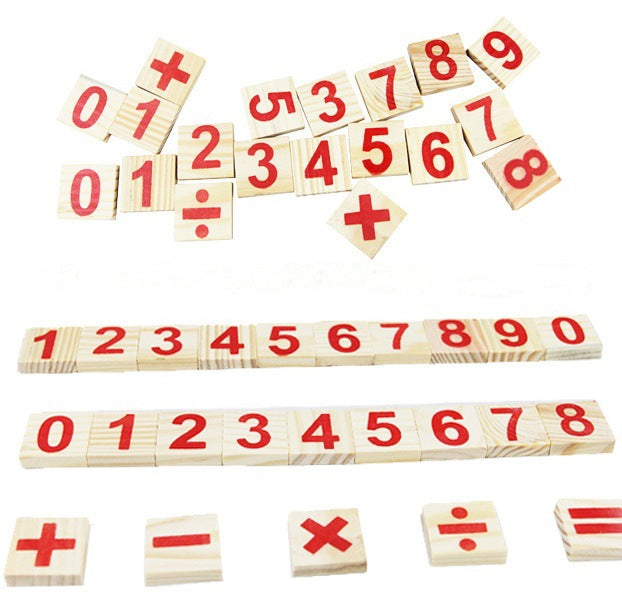
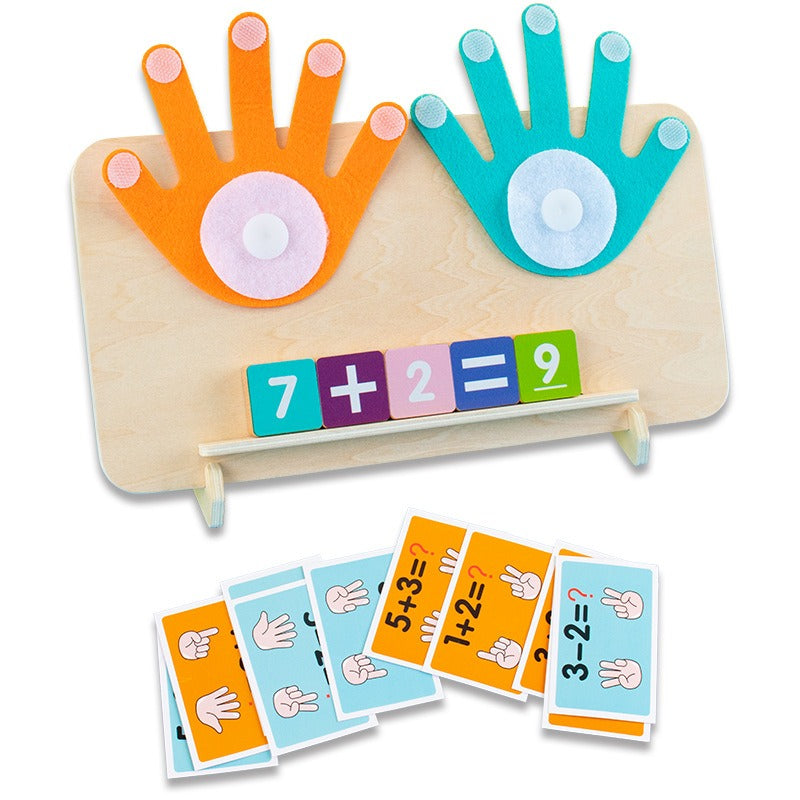
The number and arithmetic tile rail gives children a clear place to arrange addition and subtraction equations. Quantities, symbols, and answers stay together instead of disappearing into a loose pile of counters.

Match Numbers By Color
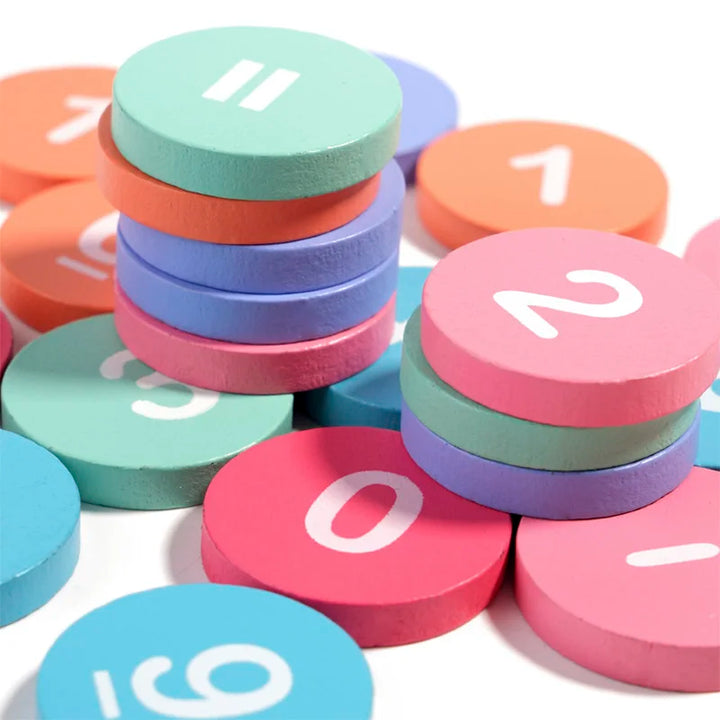
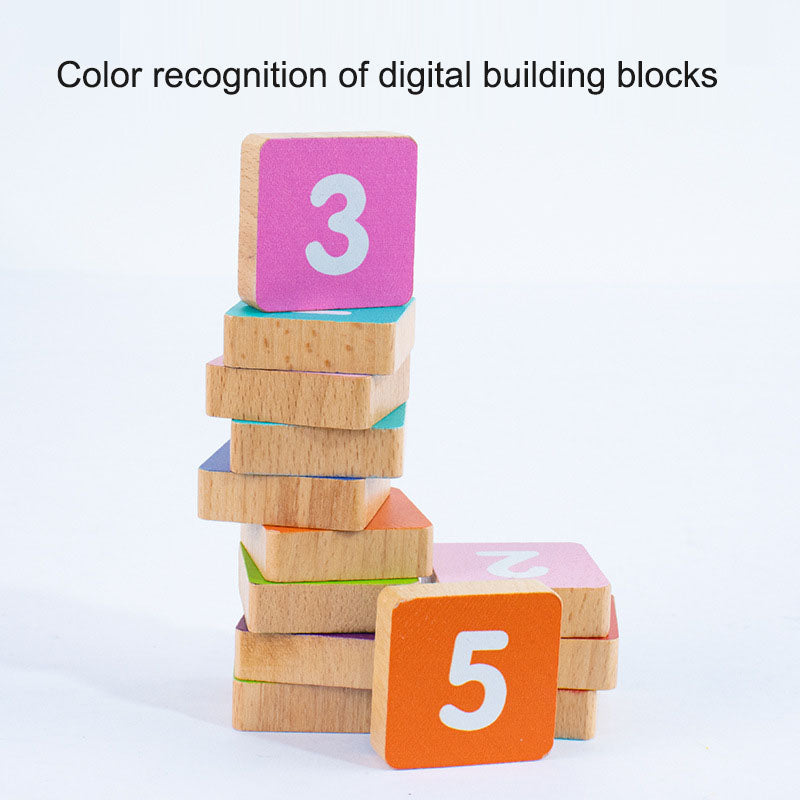
Bright number blocks and illustrated equation cards reinforce number recognition and quantity matching through multiple visual cues. This makes it a lively kids toys educational activity rather than another flat drill.

Keep Learning Ready
The wooden display stand keeps the board presented and the activity easy to return to between short practice sessions. It gives the set a clear home on a learning table instead of leaving pieces scattered.
Build The Answer Together
Keep the first rounds short and let the child move from visible quantities to written symbols.
Start With Counting
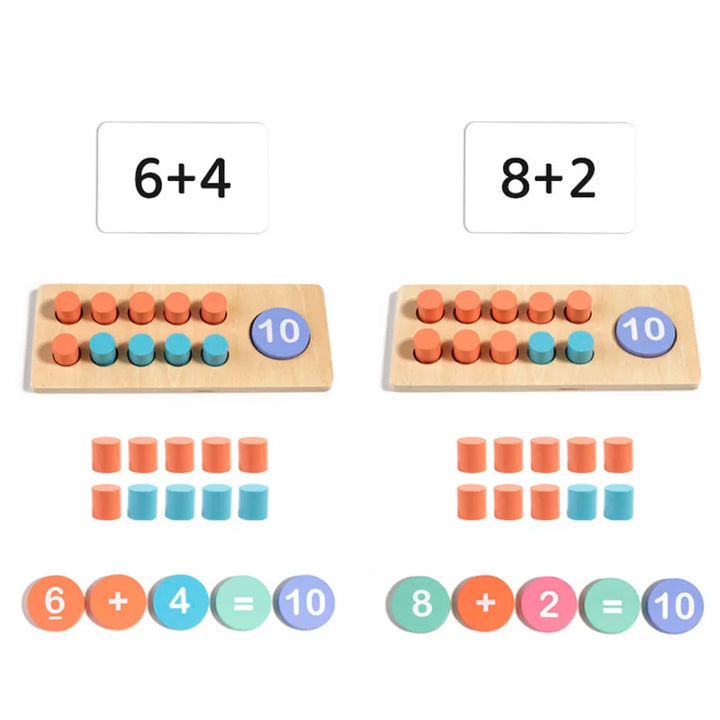
Choose one illustrated card or a simple quantity. Count the raised fingers or colored blocks together and say the number aloud.
Arrange The Tiles
Place the number and arithmetic tiles on the rail. Ask the child to match each part of the equation to the fingers or blocks.
Check And Explain
Count the completed quantity, then invite the child to read the equation and explain how the answer was built.
A Clear Set At A Glance
The essentials are simple: a board, tactile hand pieces, and enough visual support to build real equations.
Why A Board Beats Worksheets
The value is in keeping quantities, symbols, and answers together instead of asking children to imagine the connection.
| Finger Math BoardBEST FOR HANDS-ON PLAY | Worksheets | Loose Counters | |
|---|---|---|---|
| Raised tactile counting pieces | ✓ | ✗ | ✗ |
| Organized equation rail | ✓ | ✗ | ✗ |
| Illustrated equation cards | ✓ | Partial | ✗ |
| Quantities and symbols stay together | ✓ | Partial | ✗ |
| Reusable screen-free activity | ✓ | ✓ | ✓ |
| Premium natural wood construction | ✓ | ✗ | ✗ |
Seven Pieces, One Learning Routine
Everything needed to move from counting practice to built equations is gathered in one colorful set.
When Numbers Start To Make Sense
A child does not need another abstract explanation. They need somewhere to place the numbers, see the quantities, and try again.

When Symbols Feel Invisible
Knowing number names is not the same as understanding what numbers do. A child can count aloud, then freeze when an equation appears because the symbols still feel disconnected from real quantities.

Put The Math In Their Hands
Raised fingers, colored blocks, and number tiles give each part of the problem a place to go. Instead of guessing, children can count, arrange, and follow the equation one step at a time.
Small Builds, Real Confidence
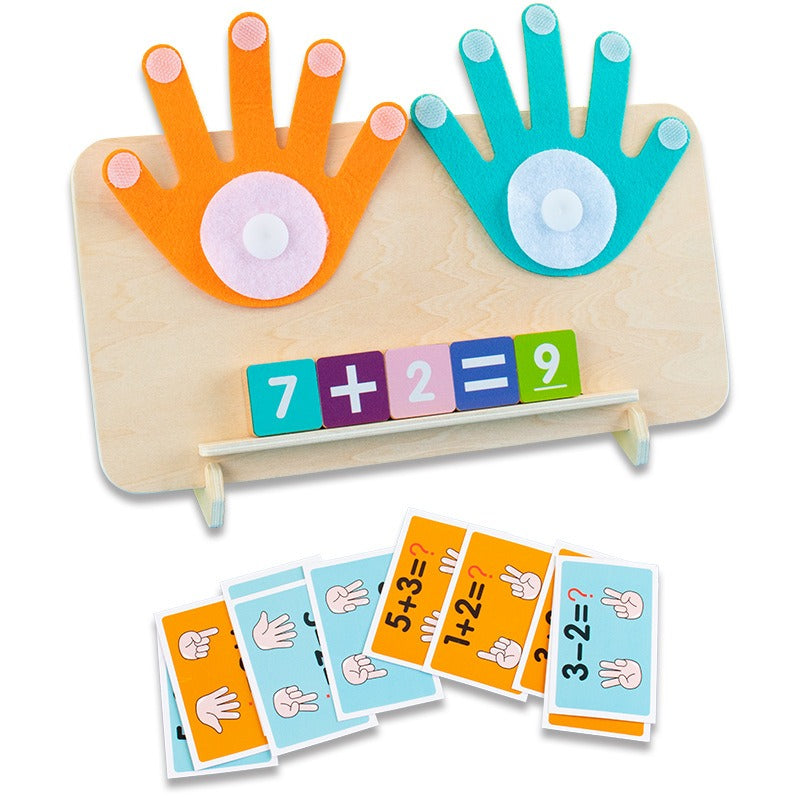
A child can match the raised fingers to an equation such as 7 + 2 = 9, then check the quantity with blocks and cards. Building and explaining the answer feels very different from simply being told it.

Ready For The Next Practice
The board turns short practice into a reusable, screen-free routine. Keep it on the table or bring it into a classroom, tutoring session, or parent-child activity whenever early math needs a clearer starting point.
About this item
Turn early equations into something children can see, touch, and build. Raised hand pieces, colorful blocks, tiles, and cards make addition and subtraction a shared, screen-free learning activity.
Makes addition and subtraction tangible and engaging through hands-on finger counting
- difficulty understanding basic addition
- difficulty understanding subtraction
- abstract early math concepts
- short attention span during learning
Questions Parents Ask
A few clear answers before you choose the next math activity.
Explore more learning play
You might also like